Volkswagen Polo going electric, GTI EV confirmed

on September 04, 2025

Volkswagen has confirmed its next all-electric ID model will wear a familiar name – confirming the ID. Polo for global launch in 2026, including a go-fast ID. Polo GTI electric hot hatch.

Based on the ID. 2all concept, the 2026 Volkswagen ID. Polo will coincide with the popular nameplate’s 50th anniversary, and it will be sold alongside the existing combustion-powered Polo hatchback we already know and love.

It marks the first time one of Volkswagen’s legacy nameplates has been applied to its ID-badged electric vehicle (EV) lineup, signalling a shift in the German automaker’s strategy after it initially tried to delineate its new EVs with a largely numerical naming structure – think ID.3, ID.4, ID.5 and ID.7.

“A model like the Polo shows just how powerful a name can be: it stands for reliability, personality and history. That’s precisely why we are again giving our ID. models names that arouse emotions and are anchored in people’s everyday lives,” said Martin Sander, member of the Volkswagen brand board of management for sales, marketing and aftersales.

“Electric mobility should not only be progressive, but also accessible and personal.”

CarExpert can save you thousands on a new car. Click here to get a great deal.
As for the electrification of the GTI performance badge, Mr Sander said: “We are bringing one of our strongest brands, the GTI, into the electric world”.

“Also launching in 2026, the ID. GTI Concept model will go into production as the ID. Polo GTI. It will offer outstanding dynamics and plenty of driving pleasure,” Mr Sander added.

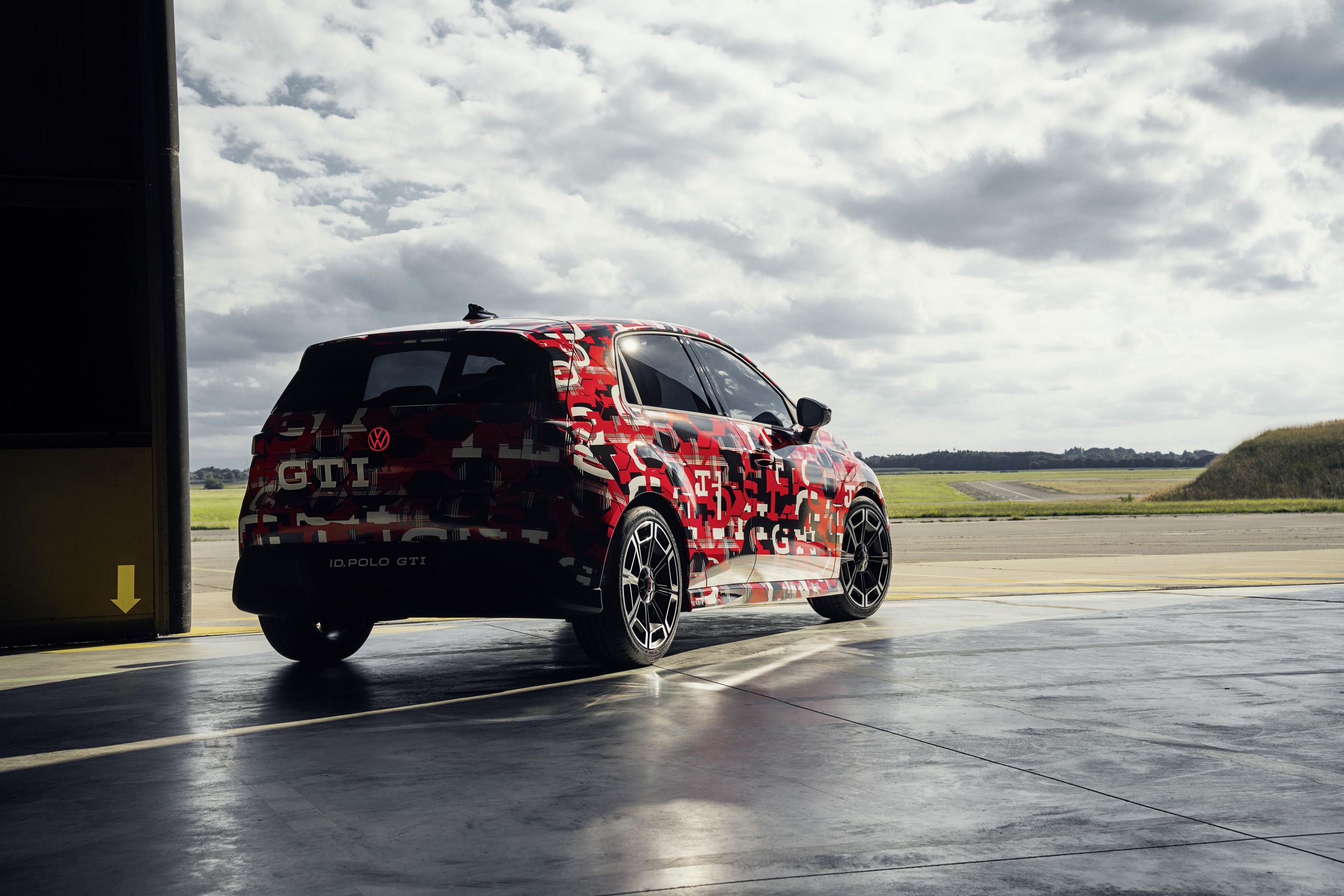
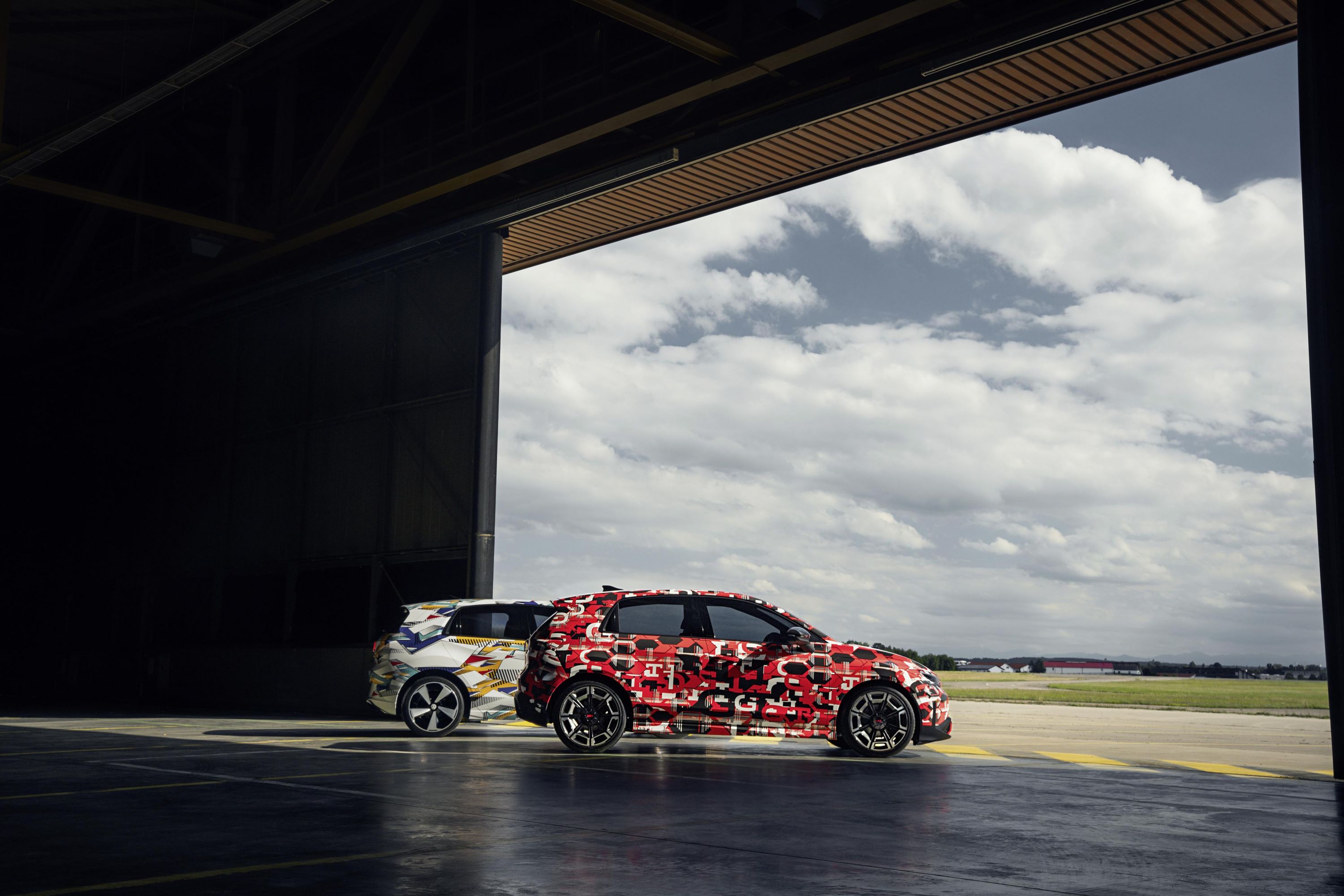
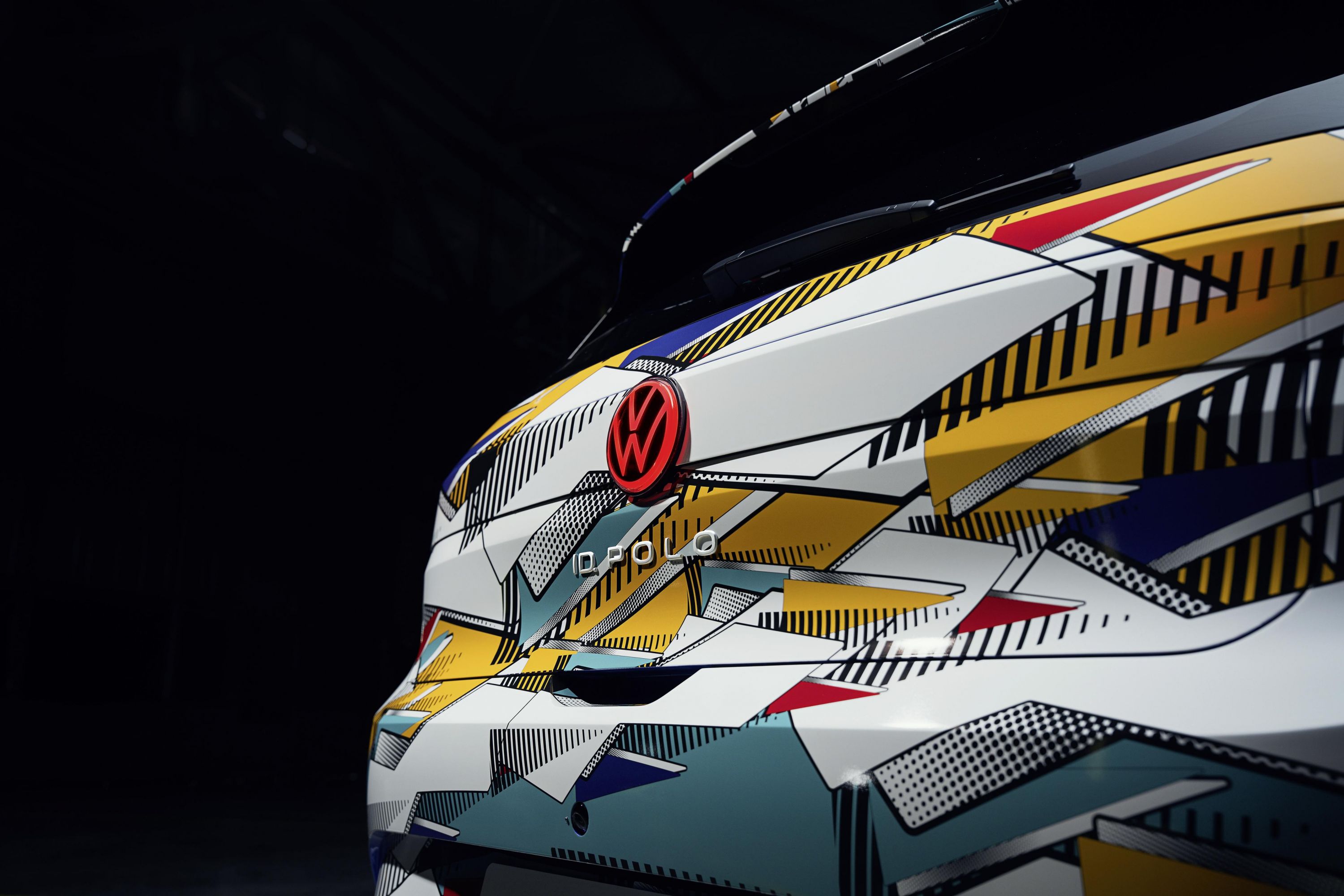
Volkswagen has previewed the new compact EVs with a pair of camouflaged prototypes that will make their public debut (still camouflaged) at the IAA Mobility show in Munich next week (September 8-14).

In addition to the ID. Polo, Volkswagen will reveal the ID. Cross Concept, previewing another compact EV due in 2026 as the electric counterpart to the Polo-based T-Cross crossover.

“For Volkswagen, the premiere of the smaller and more compact vehicles in its electric family marks the start of a new era – it will make electric driving more affordable than ever,” the company said in its media release.

“All new models show clearly, that Volkswagen is responding even more closely to customer feedback. This is evident, among other things, in the higher level of quality with soft materials, the intelligent combination of digital and physical controls such as buttons and knobs in the steering wheel and cockpit as well as the intuitive operating concept.”
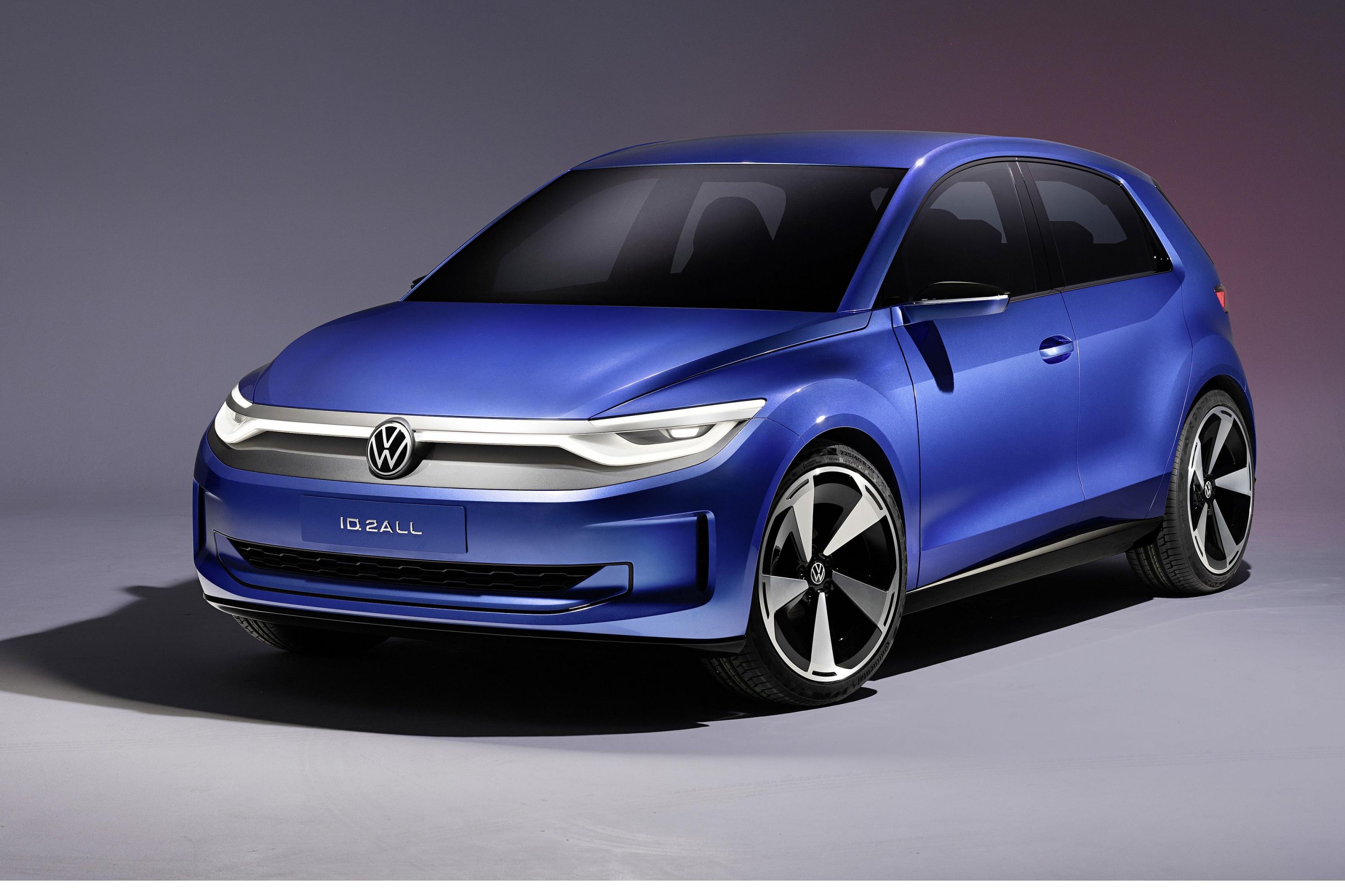
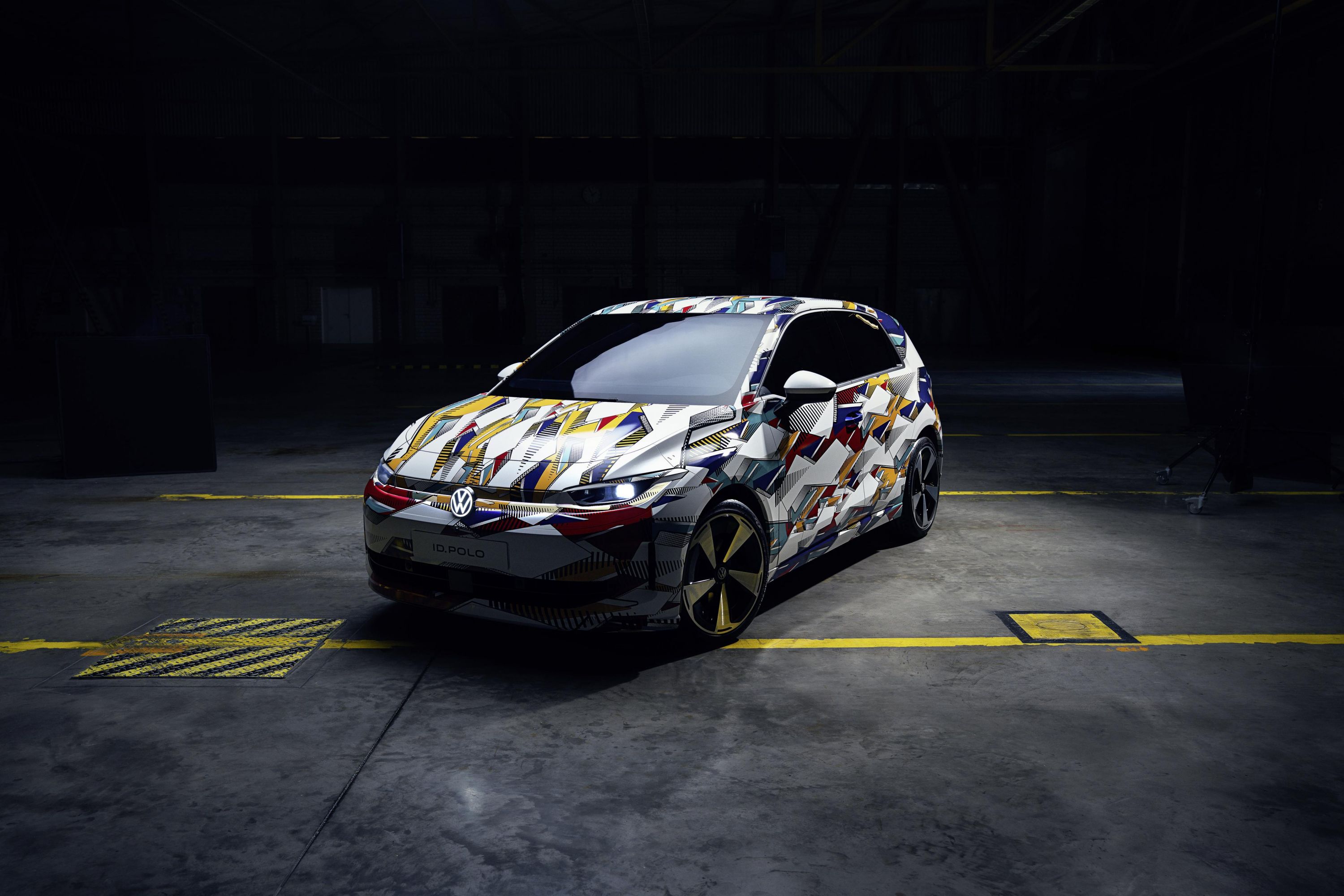
Above: ID. 2all Concept versus ID. Polo

The ID. 2all concept was first revealed in March 2023, when it was said to preview a new compact EV brandishing an “inside as spacious as a Golf, but outside as cute and small as a Polo”, and an intended starting price of under €25,000 (A$44,549).

While that direct currency conversion seems expensive, the petrol-powered Polo starts at just over €20,000 (A$35,639) in Germany, and that’s for the bargain base model with much less equipment than the entry-level Polo Life in Australia, which starts at $30,790 before on-road costs.

Technical details for the production version of VW’s new entry-level EV will likely be detailed at the Munich event, though the concept boasted a 166kW electric motor on the front axle, and a projected driving range of up to 450km per charge.

No doubt there will be a couple of battery and motor variants to offer a better spread of pricing, performance and driving range.

While it’s a new compact EV with front-wheel drive, the ID. 2all – and therefore the ID. Polo – will be based on the VW Group’s existing MEB platform rather than the cheaper MEB Entry architecture that’s set to debut with the Cupra Raval.

Following the reveal of the ID. 2all, Volkswagen Passenger Vehicles Australia head of product Michelle Rowney told CarExpert that this market was “definitely going to have it [the production version], just a matter of when”.
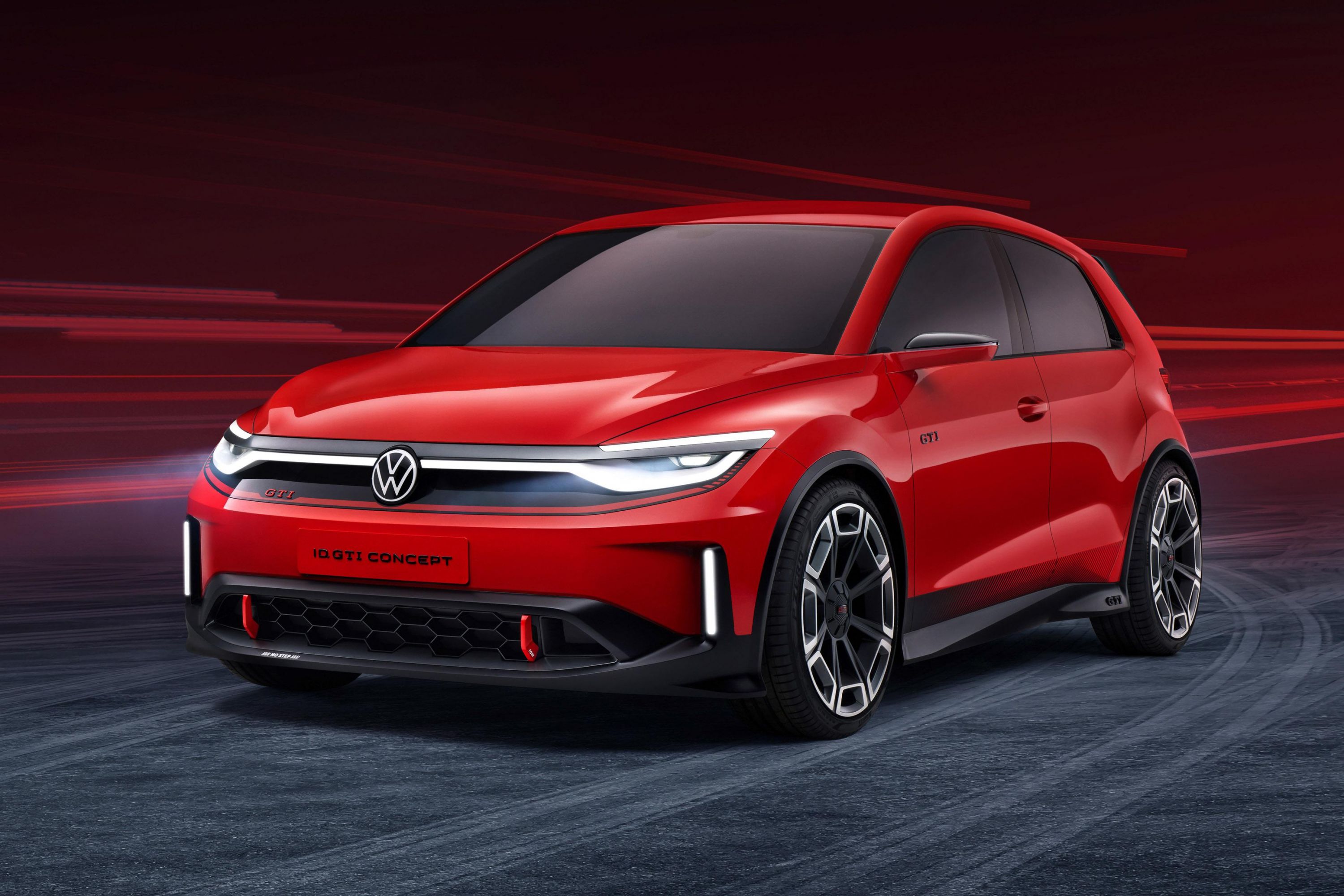
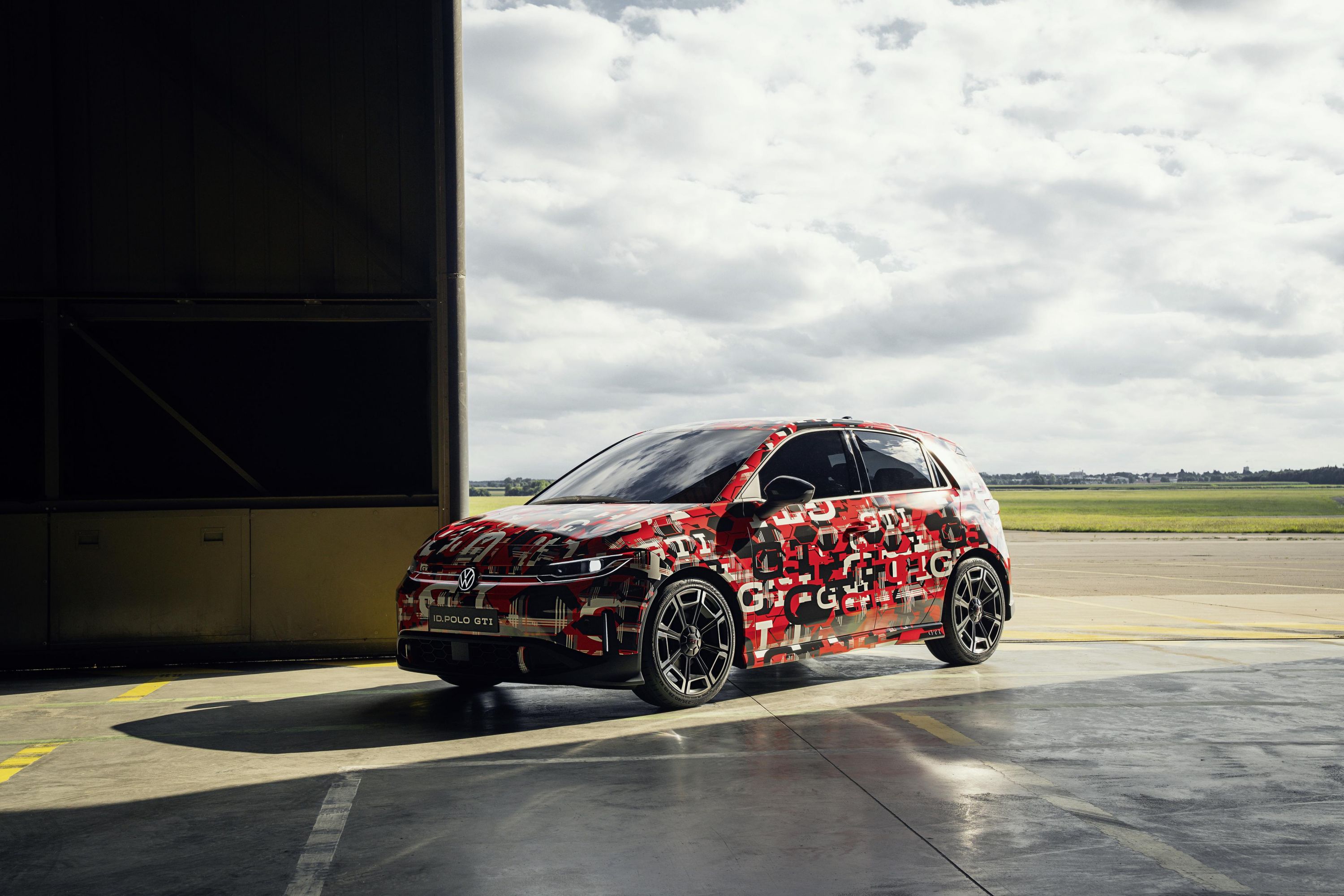
Above: ID. GTI Concept versus ID. Polo GTI

At the 2023 Munich motor show, Volkswagen then revealed the ID. GTI concept, previewing the ID. Polo GTI that’s now been confirmed for production in 2026.

Details on the powertrain weren’t divulged, though VW did confirm the ID. GTI would be front-wheel drive like the petrol-powered Polo GTI.

Externally, the ID. GTI builds on the ID.2all concept with an aggressive lower lip up front, red recovery hooks and a prominent rear diffuser.

Inside, Volkswagen has created GTI Experience Control. This includes the ability to customise the drive experience with simulated gear shifts (similar to the Hyundai Ioniq 5 N), as well as adjusting the steering and sound system.

A physical gear shifter has been replaced with an e-shifter, while a 10.9-inch digital instrument cluster changes the game in terms of offering drivers ultimate visibility over various functions beyond your typical speed and power meter readouts.

“Given Australia is a performance focused market and GTI makes up a significant portion of Polo and Golf sales, we will have our hand up for any future production version of the ID. GTI,” said a spokesperson for Volkswagen Australia at the time.
Stay tuned to CarExpert for more ID. Polo details from IAA Mobility Munich next week.
MORE: Explore the Volkswagen Polo showroom

Smart ForTwo successor confirmed for late 2026 debut

on September 04, 2025

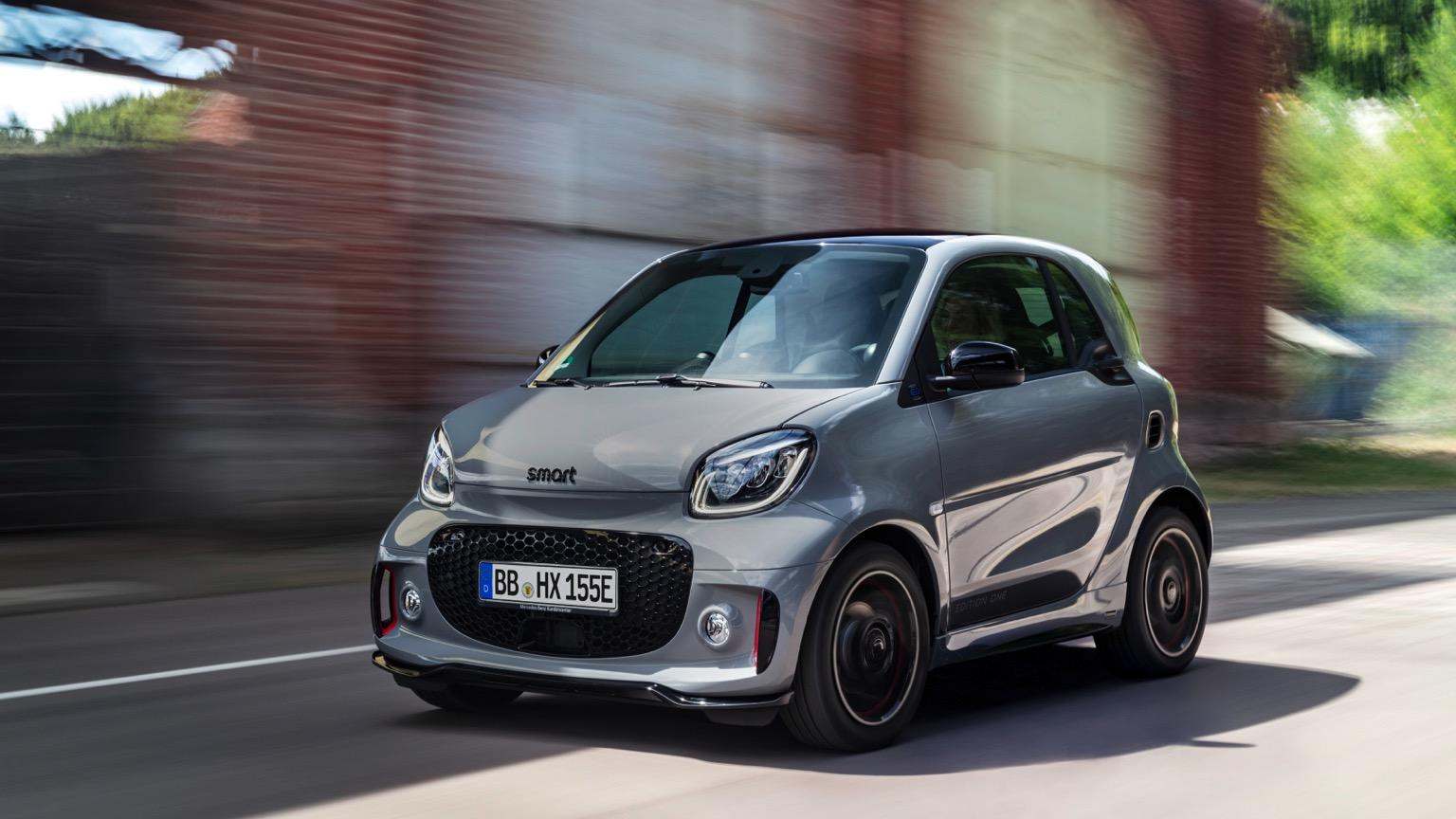
Smart will be returning to its roots with the new #2 city car that will act as a successor to the ForTwo, which finished production last year.

Earlier this week the brand confirmed the #2 will be a two-seat ultra-compact city vehicle. It will be designed by Mercedes-Benz, and ride on an “all-new proprietary architecture for ultra-compact vehicles” being engineered in-house by Smart.

The Smart #2 will be launched in late 2026, and sold in China and Europe, as well as some “selected global markets”. Like the other cars in Smart’s current lineup, the #2 will be built in China.

CarExpert can save you thousands on a new car. Click here to get a great deal.

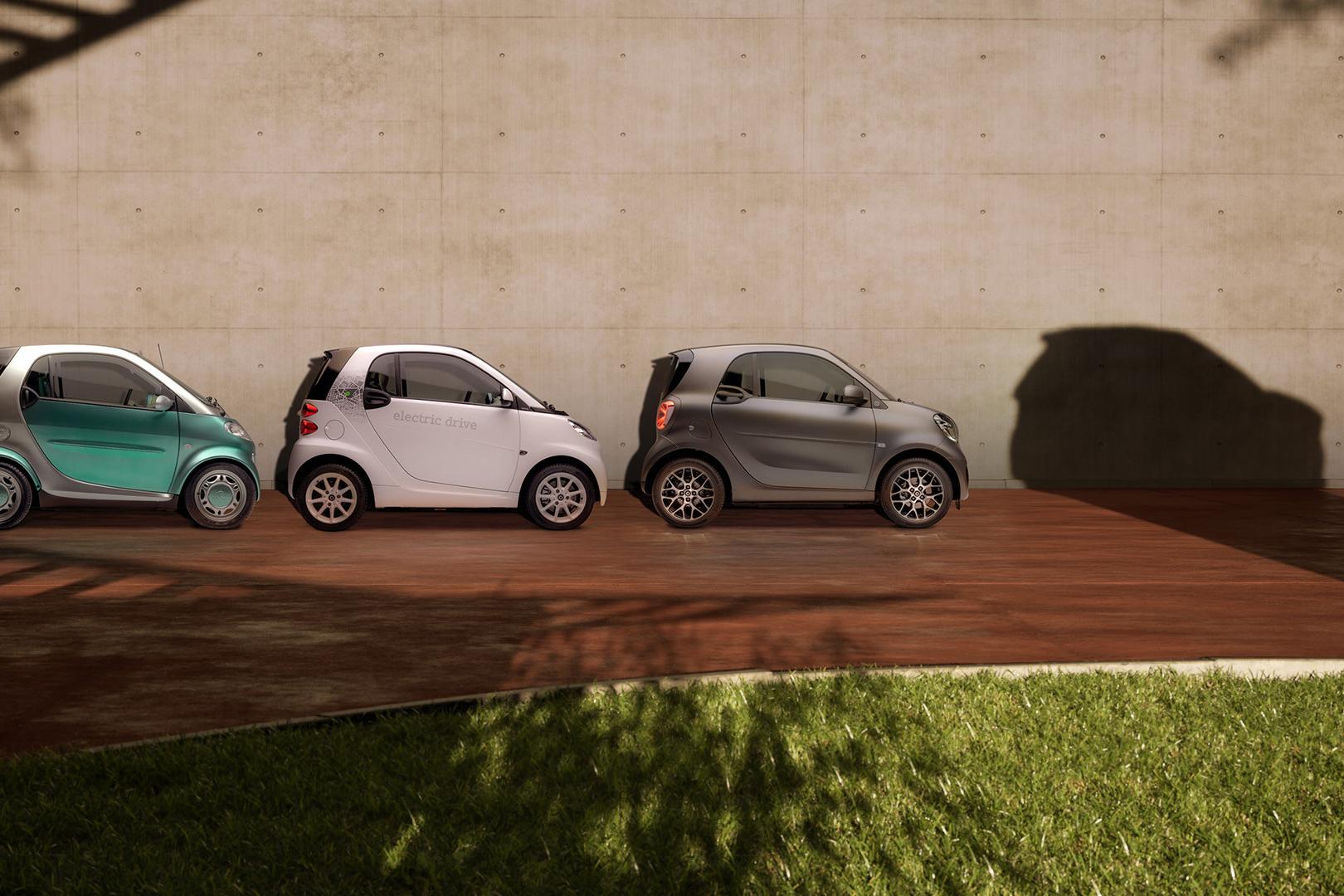
As part of its announcement, Smart released some images showing a shadowy representation of the new #2, but the company hasn’t indicated what type of layout the #2 will adopt. All three previous generations of the ForTwo had a rear-engine rear-wheel drive setup.

It also remains to be seen whether the #2 will be quite as small as its predecessors, with the third-generation ForTwo measuring just 2.7m from end to end.

The original ForTwo was conceived as part of a joint venture with Swiss watchmaker Swatch. The partners fell out – with Mercedes-Benz buying out Swatch’s share – after the development team abandoned initial plans for electric and hybrid drivetrains.

The Smart City Coupe (above) – later renamed ForTwo – went into production in 1998 with a 599cc three-cylinder petrol engine hooked up to a difficult-to-drive six-speed automated manual transmission.

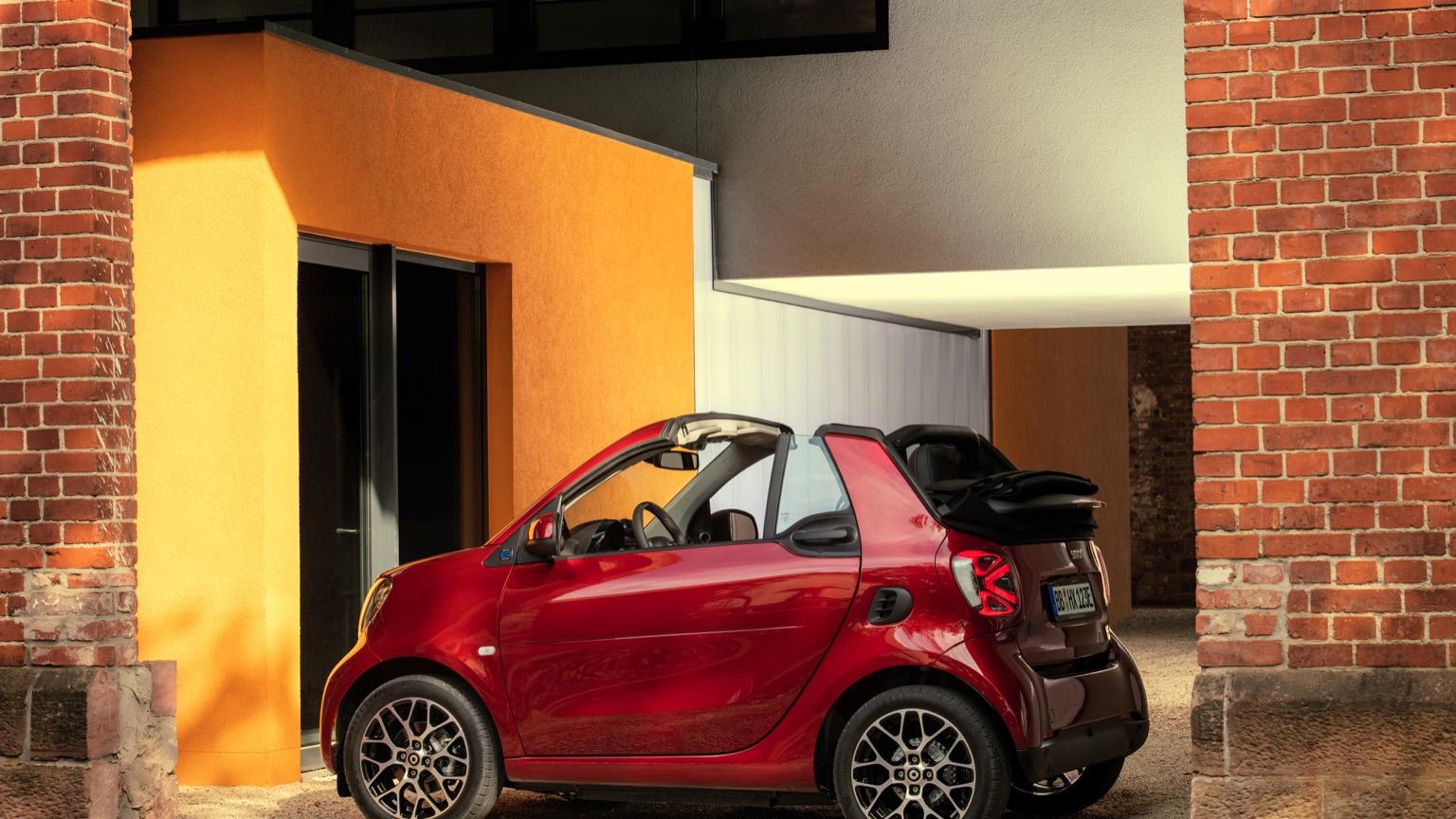
Across its three generations, the ForTwo was available as a hatch and soft-top convertible. Interestingly, after a few modifications, the ForTwo was one of the few foreign-made vehicles that was classed as a kei car in Japan.

Although the ForTwo sold steadily throughout its run, the brand struggled to break even, and Mercedes-Benz sold a 50 per cent stake to Geely in 2019.

As part of the joint venture, new Smart vehicles are styled by Mercedes-Benz and engineered by Geely. In order to make the electric-only marque profitable, this new generation of Smart cars are built in China with Smart’s original factory in Hambach, France sold to Ineos to produce the Grenadier SUV and Grenadier Quartermaster ute.

Although the ForTwo didn’t revolutionise the city car segment like its original developers had hoped, it did spawn a bunch of copy cats, including the Toyota iQ that ceased production in 2015. Others, like the Bestune Pony and Wuling Hongguang, continue to compete at the bottom end of the Chinese EV market.

Smart returned to the Australian market last year after a nine-year hiatus with the #1 and #3 electric SUVs.

MORE: Everything Smart

2027 Hyundai Tucson spied with boxy new look

on September 03, 2025

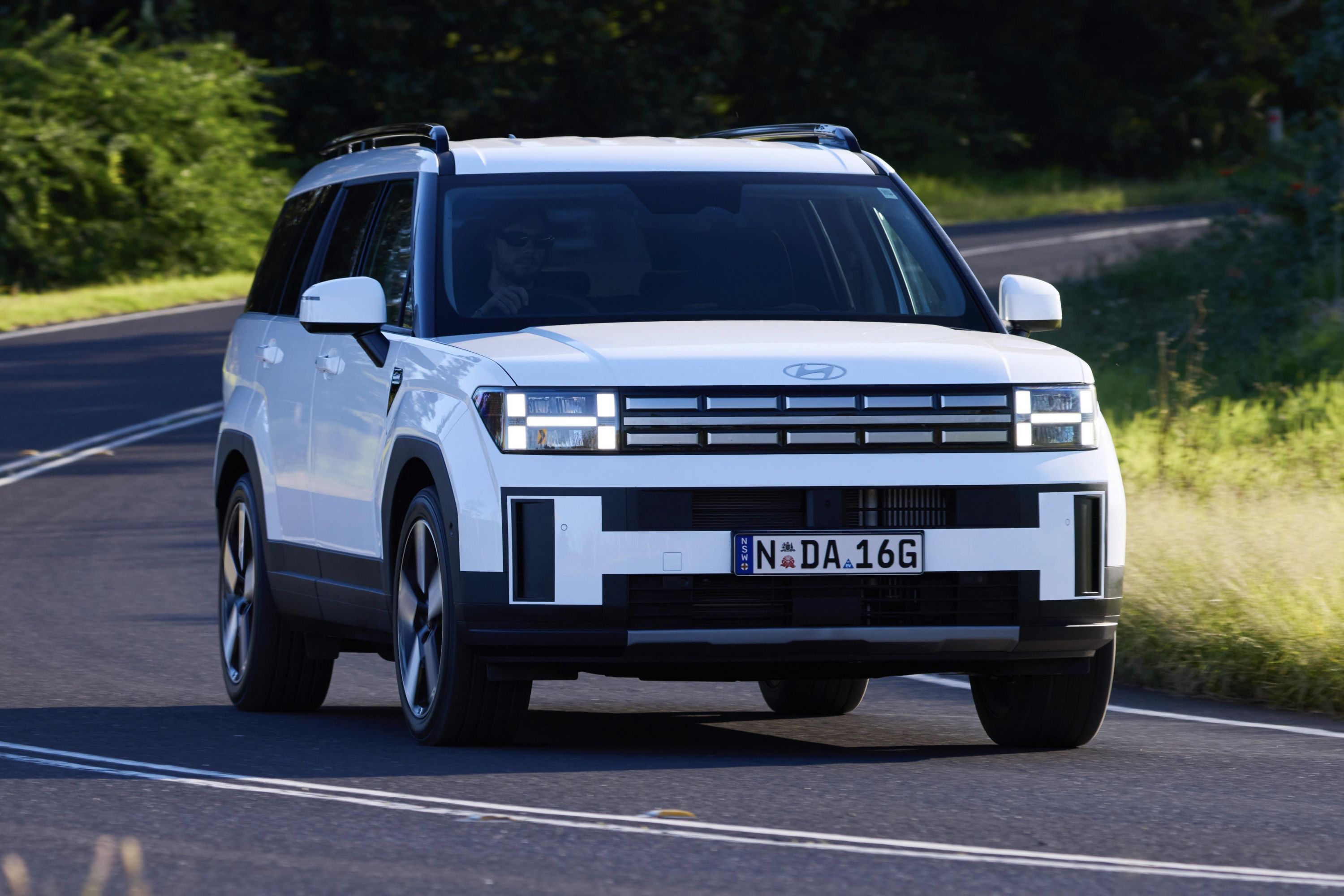
The fifth-generation Hyundai Tucson has been spied undergoing hot weather testing in southern Europe, providing key clues to the design of the replacement for one Australia’s top-selling mid-size SUVs.

While the prototype seen here is covered in heavy cladding to disguise the details, we can see the car’s basic silhouette and some of its styling elements.

Compared to the current Tucson, which has a rounded overall shape punctuated by sharp creases and plenty of contrasting body surfaces, the next-generation Tucson looks to have a squarer profile.

The wrap-around bonnet is flatter and rectangular in form, and is married to a more upright front fascia.

CarExpert can save you thousands on a new car. Click here to get a great deal.

The current Tucson has multiple driving light pods integrated into a deep and wide grille, but the new model will have a different design. We can’t be sure yet, but the opening in the disguise suggests the functional part of the grille will sit half way down the fascia.

There’s a headlight unit poking through in the lower portion of the disguise, indicating the new Tucson will once again have a split headlight treatment.

Along the side, we can see the car now has round wheel-arches, and an interesting wing mirror design. There’s also a sharp visor-like window design with blacked out A-pillars, similar to the look sported by the larger Santa Fe.

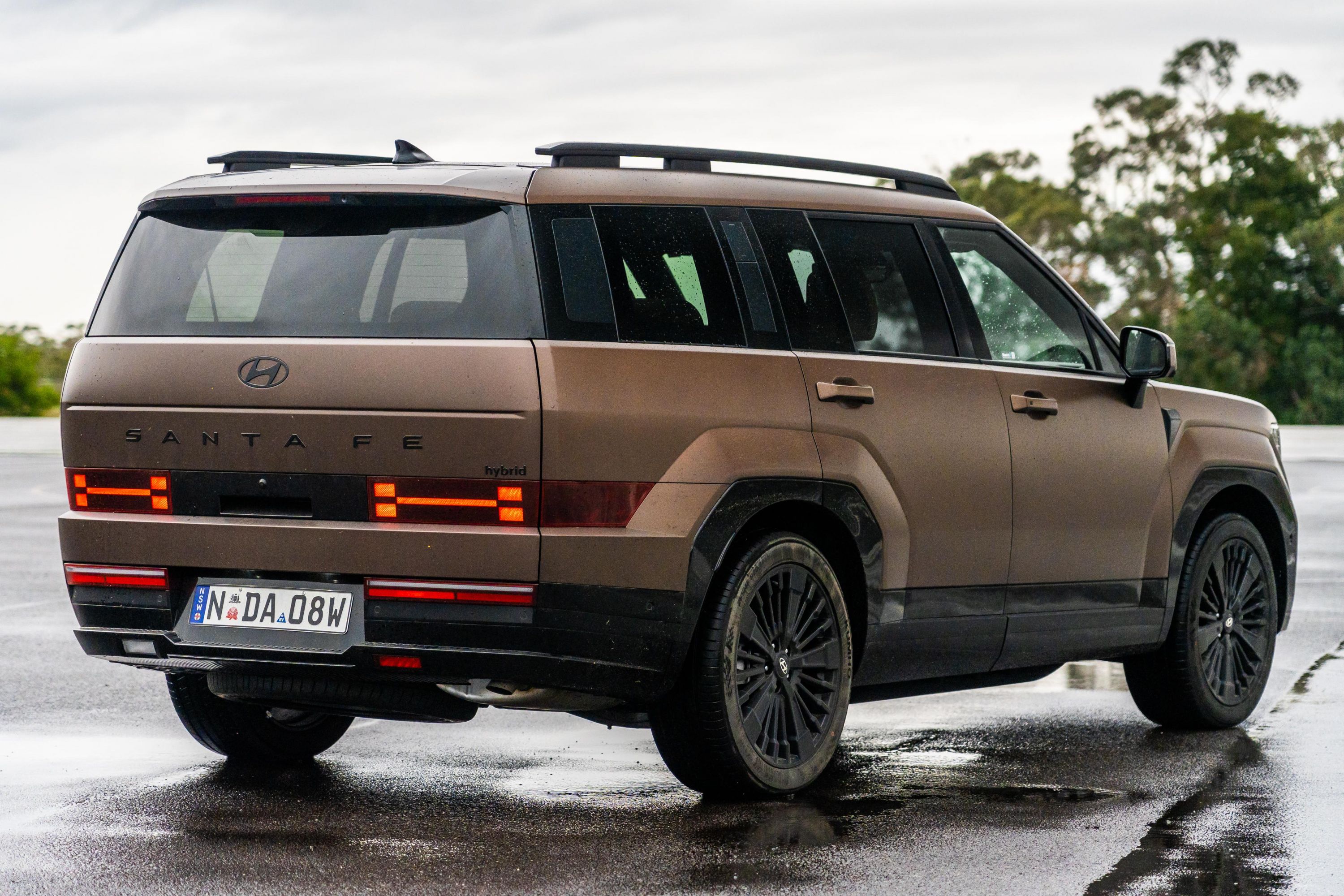
The tailgate seems to be less upright than on the larger SUV, though. With all the cladding attached to the rear-end, we can’t tell whether the Tucson inherits the controversial tail-light treatment of the latest Santa Fe (pictured below).

Reports indicate the interior will be graced by Hyundai’s new Pleos Connect infotainment system, which is based on the Android Automotive operating system, giving it built-in access to Google Maps, the search giant’s voice recognition assistant, and the company’s app store.

It’s unclear what drivetrains the new Tucson will be available with, but currently the local range is sold with a 115kW/192Nm 2.0-litre naturally-aspirated four-cylinder petrol engine driving the front wheels, and a 132kW/264Nm 1.6-litre hybrid system with front- or all-wheel drive.

With the car’s most recent update, Hyundai Australia dropped the 132kW/265Nm 1.6-litre turbo-petrol engine from the local range (outside of the hybrid). The closely related Kia Sportage is also available with a 137kW/416Nm 2.0-litre turbo-diesel.

The Tucson is one of Hyundai Australia’s most popular models. To the end of July this year, the company has sold 12,186 examples, which was fewer than only the Kona small SUV (13,144) and almost double the number of i30 small sedans and hatchbacks sold (6472).

MORE: Everything Hyundai Tucson

2026 Cupra Leon price and specs: Facelifted small car gets new wagon, hybrid options

on September 03, 2025

The facelifted Cupra Leon is arriving in Australia soon, and the lineup looks as dramatically different as its unusual new headlights.

The hot Leon Hatch VZx is the only carryover variant in the updated lineup, still packing a turbocharged 2.0-litre four-cylinder petrol engine producing 221kW of power and 400Nm of torque. It’s priced at $64,990 before on-road costs.

It’s now bookended at the bottom end of the range by the much cheaper Leon Hatch S, featuring a new turbocharged 1.5-litre four-cylinder mild-hybrid powertrain producing 110kW and 250Nm. It opens the range at $46,990 before on-roads.

Its 48V starter-generator and lithium-ion battery allows the vehicle to coast with the engine switched off during certain driving conditions, while also recovering energy under braking.

CarExpert can save you thousands on a new car. Click here to get a great deal.

Sitting at the top of the lineup just above the VZx in terms of price (but not performance) is the Leon Sportstourer VZe at $69,990 before on-roads.

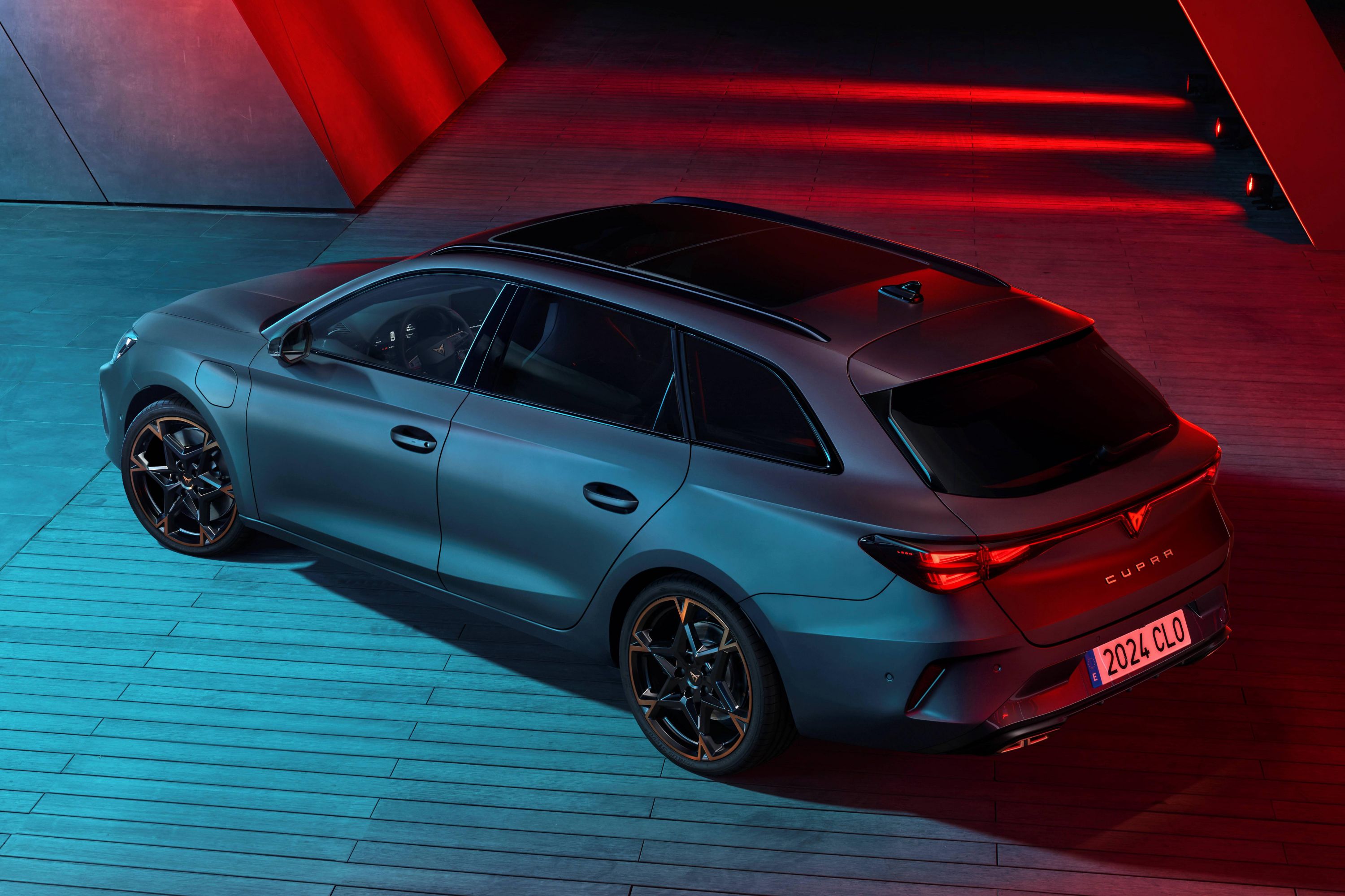
It represents the first time the Leon has been offered as a wagon locally, and also debuts a new longer-range plug-in hybrid powertrain with total outputs of 200kW/400Nm and 121km of electric-only range on the WLTP cycle.

S and VZx versions of the Leon Hatch, as well as the Leon Sportstourer VZe, are available to test drive and order from October ahead of customer deliveries commencing in November 2025.

Cupra has previously confirmed a 245kW all-wheel drive VZx Sportstourer and a 150kW Ve hatchback will join the lineup early in 2026, giving Volkswagen Group Australia a replacement for the defunct Volkswagen Golf R wagon and the outgoing Leon Hatch VZe respectively.

The rollout of the updated Leon lineup was originally set to start in the second quarter of this year.

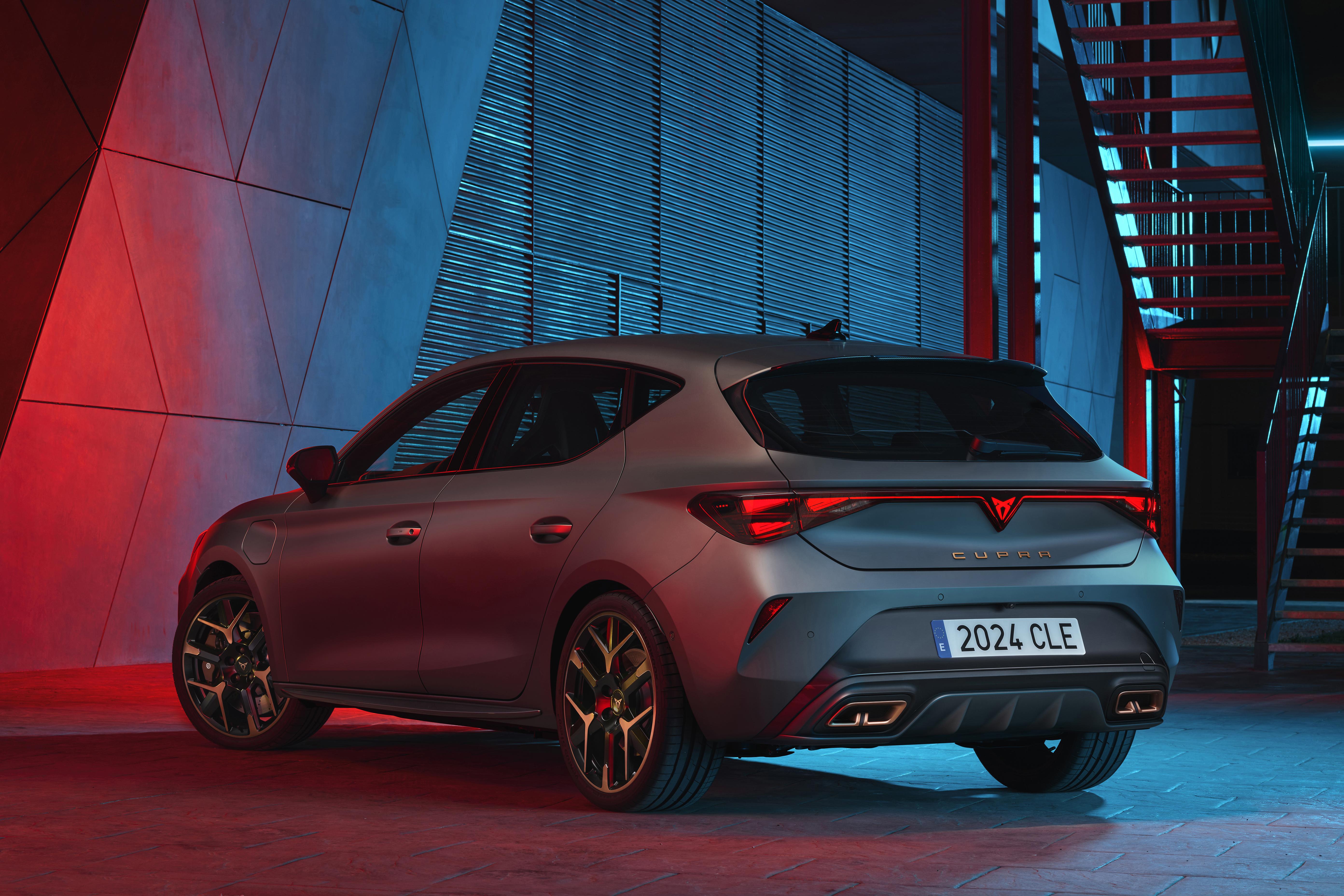
The facelift brings a ‘shark-nose’ front-end with triangular LED daytime running lights, while down back there’s an illuminated Cupra logo.

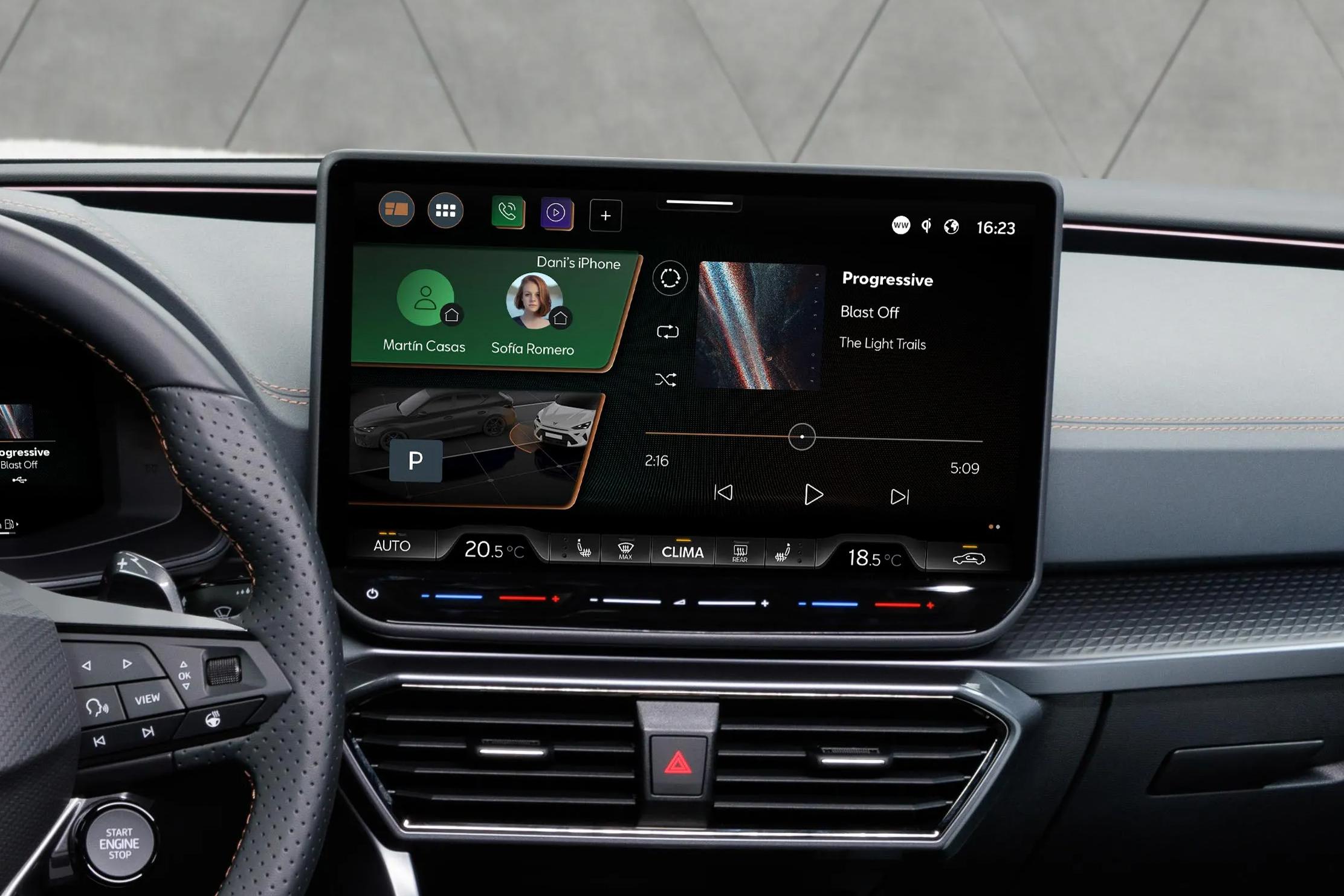
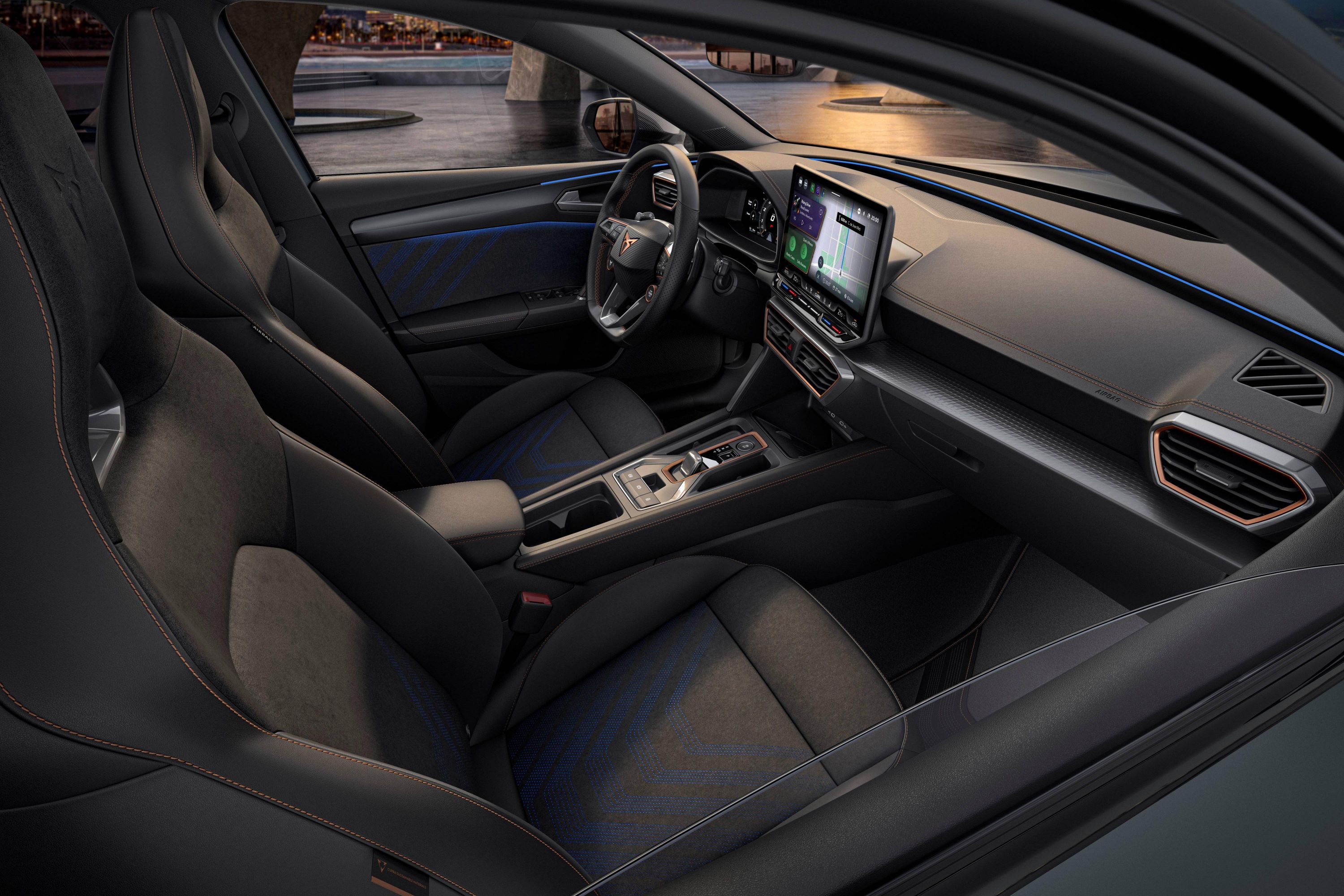
Inside, there’s an overhauled centre console and dashboard, as well as new materials and a larger 12.9-inch infotainment touchscreen featuring backlit touch sliders underneath.

The reshuffled lineup locally sees the demise of the turbocharged 2.0-litre four-cylinder petrol-powered V and VZ models, which produced 140kW/320Nm and 180kW/370Nm respectively.

Pricing

ModelPrice before on-road costs
2026 Cupra Leon Hatch S$46,990
2026 Cupra Leon Hatch VZx$64,990
2026 Cupra Leon Sportstourer VZe$69,990

Drivetrains and Efficiency

The Leon is offered with varying degrees of electrification, from none (Hatch VZx) to a mild-hybrid system (Hatch S) up to a plug-in hybrid system (Sportstourer VZe).

The Sportstourer VZe can be fast-charged using DC power.

SpecificationsLeon Hatch SLeon Hatch VZxLeon Sportstourer VZe
Engine1.5L turbo 4cyl 48V mild-hybrid2.0L turbo 4cyl1.5L turbo 4cyl plug-in hybrid
Power110kW221kW200kW
Torque250Nm400Nm400Nm
Battery capacity25.8kWh (gross)
Transmission7-speed dual-clutch auto7-speed dual-clutch auto6-speed dual-clutch auto
Drive typeFront-wheel driveFront-wheel driveFront-wheel drive
0-100km/h (claimed)8.7 seconds5.7 seconds7.3 seconds
Fuel economy (claimed)5.4L/100km7.6L/100km0.4L/100km
Electric driving range (WLTP)121km

Dimensions

DimensionsLeon HatchLeon Sportstourer
Length4398mm4656mm
Width1799mm (1992mm incl. mirrors)1799mm (1992mm incl. mirrors)
Height1444mm1438mm (1466mm incl. roof racks)
Wheelbase2686mm2686mm
Cargo capacity380L470L

Servicing and Warranty

Cupra Australia backs its vehicles with a five-year, unlimited-kilometre vehicle warranty, plus an eight-year, 160,000km high-voltage battery warranty for plug-in hybrid and electric vehicles.

The company has yet to announce servicing details for the refreshed Leon lineup.

Safety

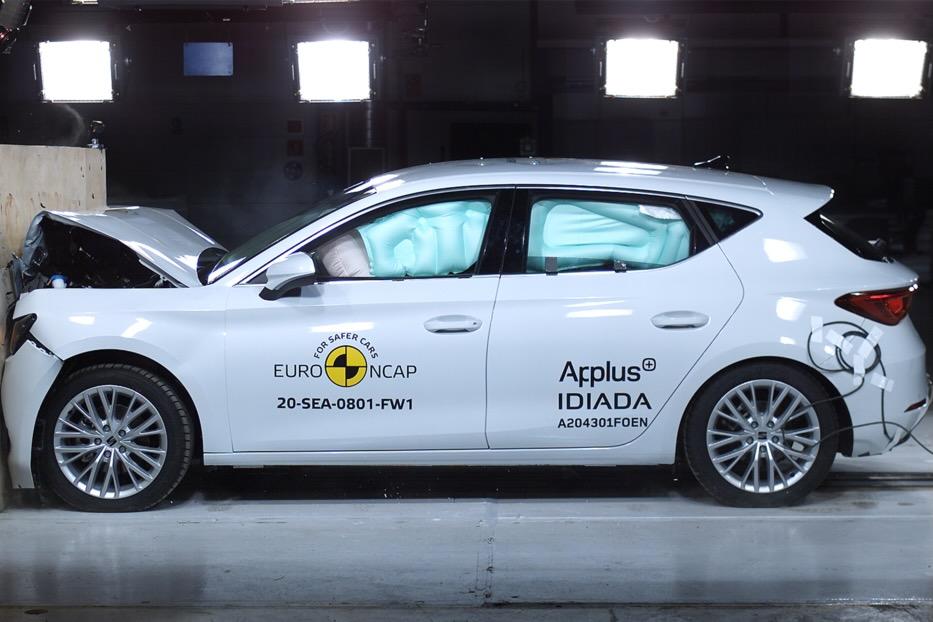
The Cupra Leon has a five-star safety rating from ANCAP, based on testing conducted in 2020.

CategoryCupra Leon
Adult occupant protection91 per cent
Child occupant protection88 per cent
Vulnerable road user protection71 per cent
Safety assist80 per cent

Standard safety equipment across the range includes:

  • Adaptive cruise control
  • Autonomous emergency braking
  • Blind-spot monitoring
  • Front cross-traffic assist
  • Lane-keep assist
  • Rear cross-traffic alert
  • Speed sign recognition
  • Speed limit assist
  • Travel Assist (adaptive cruise + lane centring)
  • Reversing camera
  • Front and rear parking sensors
  • 10 airbags including rear side, front centre airbags

Standard Equipment

There are three members of the 2026 Leon lineup.

The Leon Hatch S comes standard with the following equipment:

  • 18-inch ‘Windstorm’ black and silver alloy wheels
  • LED headlights
  • Semi-autonomous parking assist
  • Proximity entry with push-button start
  • Paddle shifters
  • Selectable drive modes
  • 10.25-inch digital instrument cluster
  • 12.9-inch touchscreen infotainment system
  • Satellite navigation
  • Wireless Apple CarPlay and Android Auto
  • Wireless phone charger
  • Sports front bucket seats
  • Soul Black Dinamica upholstery
  • Power-adjustable driver’s seat with memory
  • Heated front seats
  • ‘Supersport’ heated steering wheel
  • 6-speaker sound system
  • 3-zone climate control
  • Ambient lighting
  • Auto-dimming interior mirror

Over the Leon Hatch S, the Leon Hatch VZx adds:

  • Multi-link independent suspension
  • DCC adaptive dampers
  • Electrohydraulic front differential locking
  • Customisable engine sound modelling
  • Upgraded brakes
  • Tyre repair kit (replaces space-saver spare)
  • Cupra drive mode
  • Quad exhaust outlets
  • Side skirts
  • 19-inch ‘Hailstorm’ black and copper alloy wheels
  • Moonslate leather-appointed seat trim
  • Power-adjustable front passenger seat with memory
  • 12-speaker Sennheiser sound system

Over the Leon Hatch S, the Leon Sportstourer VZe adds:

  • 19-inch ‘Polar’ black and copper alloy wheels
  • DCC adaptive dampers
  • Hands-free power tailgate
  • Black roof rails
  • Mode 2 & 3 charging cables
  • 12-speaker Sennheiser sound system
  • Power-adjustable front passenger seat with memory
  • Moonslate leather-appointed seat trim

Options

The Leather & Sound Package ($2200, Leon S only) adds:

  • Moonslate leather-appointed seat trim
  • Power-adjustable passenger seat with memory
  • 12-speaker Sennheiser sound system

The Extreme Package ($7600, Leon VZx only) ditches the front centre airbag and front seatback pockets but adds:

  • Copper 6-piston Akebono front brake calipers and larger cross-drilled front rotors
  • Matrix Ultra ‘cascading high beams’
  • Enceladus Grey Dinamica seat trim
  • CUP Bucket front seats
  • Dark gloss grey interior accents

The following standalone options are also available:

  • Sunroof: $1800 (Leon Hatch)
  • Panoramic sunroof: $2000 (Leon Sportstourer)

Colours

The following exterior paint finishes come at no extra cost:

  • Fiord Blue
  • Glacial White
  • Magnetic Tech
  • Midnight Black

The following premium finishes are available for an additional $620:

  • Taiga Grey
  • Graphene Grey
  • Dark Void

The following matte finishes are available for an additional $2650:

  • Century Bronze
  • Enceladus Grey
  • Magnetic Tech

MORE: Explore the Cupra Leon showroom

373kW hybrid Toyota Supra, mid-engine Celica coming with manual gearbox – report

on September 02, 2025

The Toyota Supra will return to showrooms in 2027 and will be joined by a revived Celica as the world’s largest automaker bolsters its sports car lineup, according to a new report from Japan.

Japanese outlet Best Car Web reports the next-generation Gazoo Racing (GR) Supra will be revealed in 2027 with a 500hp (373kW) hybrid powertrain.

Further, the Supra will crown an expanding GR sports car lineup with the Celica name reportedly set to return the following year for the first time since 2006 as a coupe with a mid-mounted engine. 

The Celica traditionally rivalled the Honda Prelude, another sports car nameplate that’s being dusted off. It’s being revived as a hybrid-powered coupe, locked in for Australian showrooms in 2026. 

CarExpert can save you thousands on a new car. Click here to get a great deal.

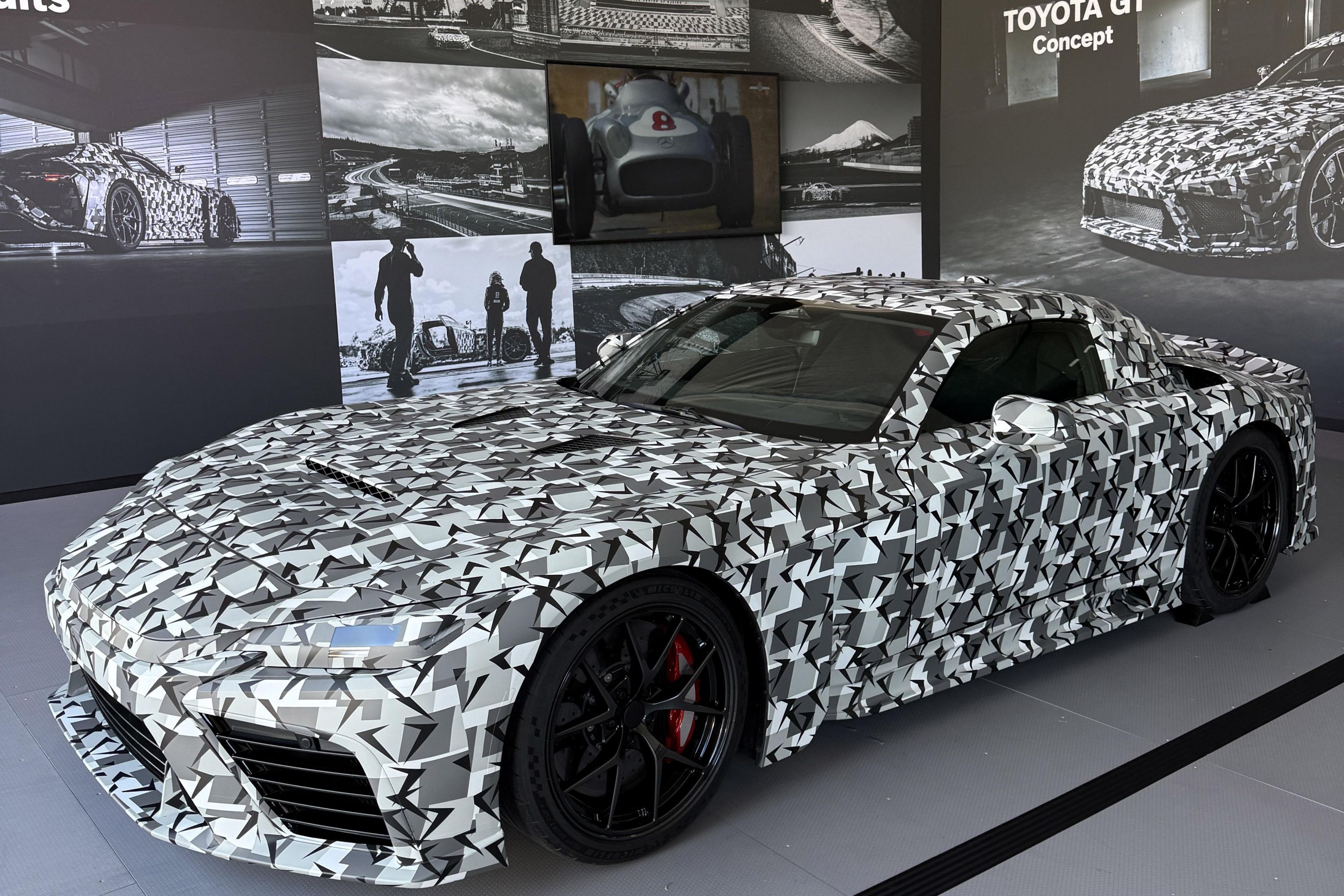
Above: Toyota GT Concept at Goodwood

The report comes as Toyota showed off a pair of new V8-powered sports car concepts at the Goodwood Festival of Speed in July, with one expected to be a successor to the Lexus LFA and the other tipped to be a racing version potentially wearing both Lexus and Toyota Supra badges.

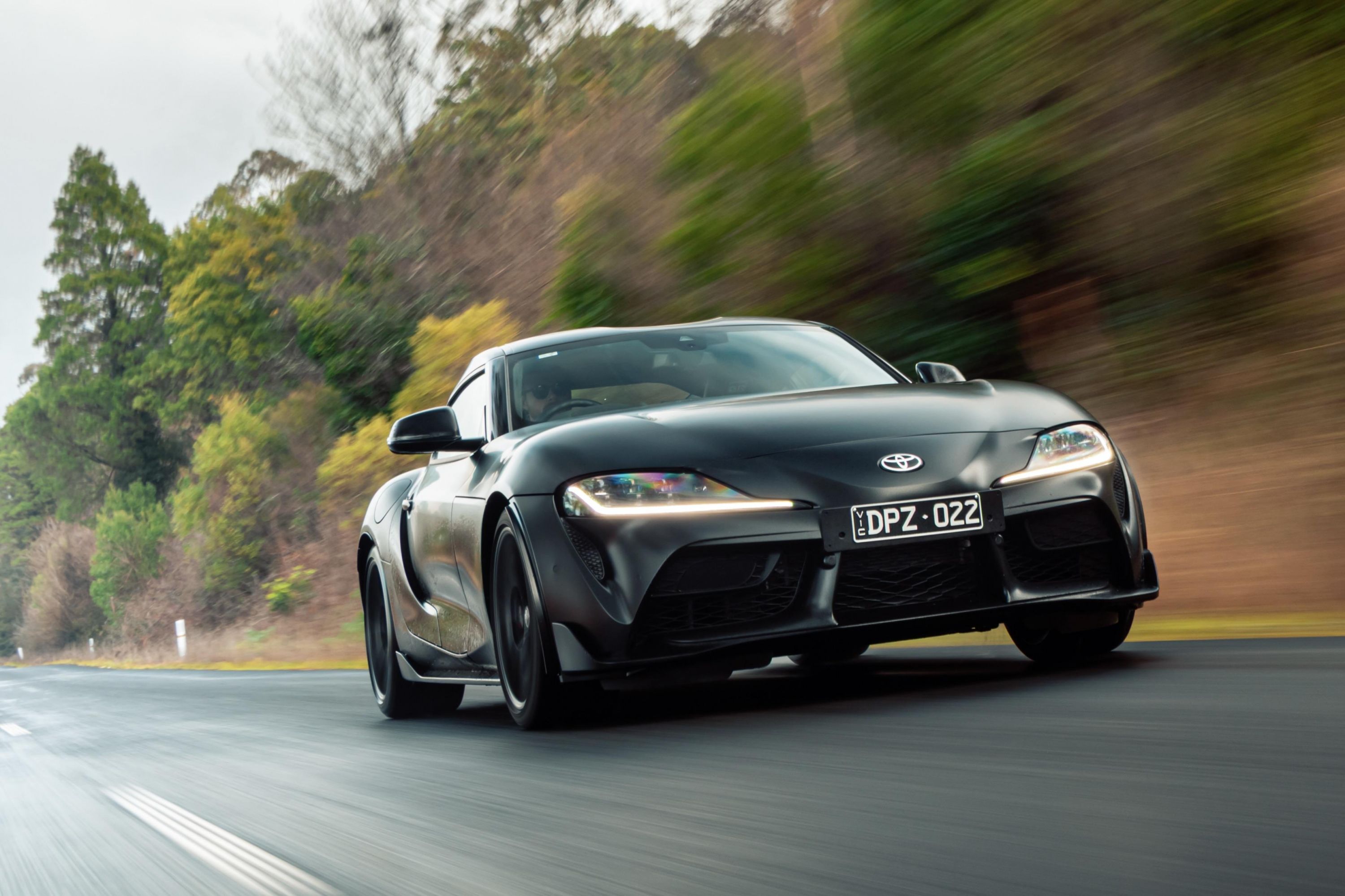
The current A90 Supra was introduced in Australia in 2019, with the automaker confirming the end of production in 2025, despite revealing the existing model as its new Supercars competitor from 2026. 

The Supra – which was originally a variant of the Celica – is said to continue with the current model’s front-engine/rear-wheel drive layout, the same as its on-track rival the Ford Mustang

Instead of today’s 3.0-litre inline six-cylinder – shared with the BMW Z4 the current Supra is twinned with – Best Car Web reports the 2027 Supra will pack a 500hp (373kW) hybrid powertrain using a new 2.0-litre turbocharged four-cylinder petrol engine.

Image: 2025 Toyota GR Supra Track Edition

That means it will eclipse the outgoing model’s figures which, in the latest GR Supra Track Edition, are 285kW/500Nm, enabling a 0-100km/h time of 4.1 seconds.

It will also easily out-do the entry-level 2.0-litre four-cylinder version of the Supra sold overseas, but not offered in Australia, which makes 190kW and 400Nm.

While Toyota Australia sales boss Sean Hanley has previously told media the Supra name will carry on after the current model’s end, the Celica’s return was confirmed by a Toyota executive in Japan late last year.

Best Car Web reports both the Supra and the Celica will use the 2.0-litre turbocharged petrol engine, the Supra’s boosted by hybrid tech including a battery and electric motor mounted behind the driver’s seat. 

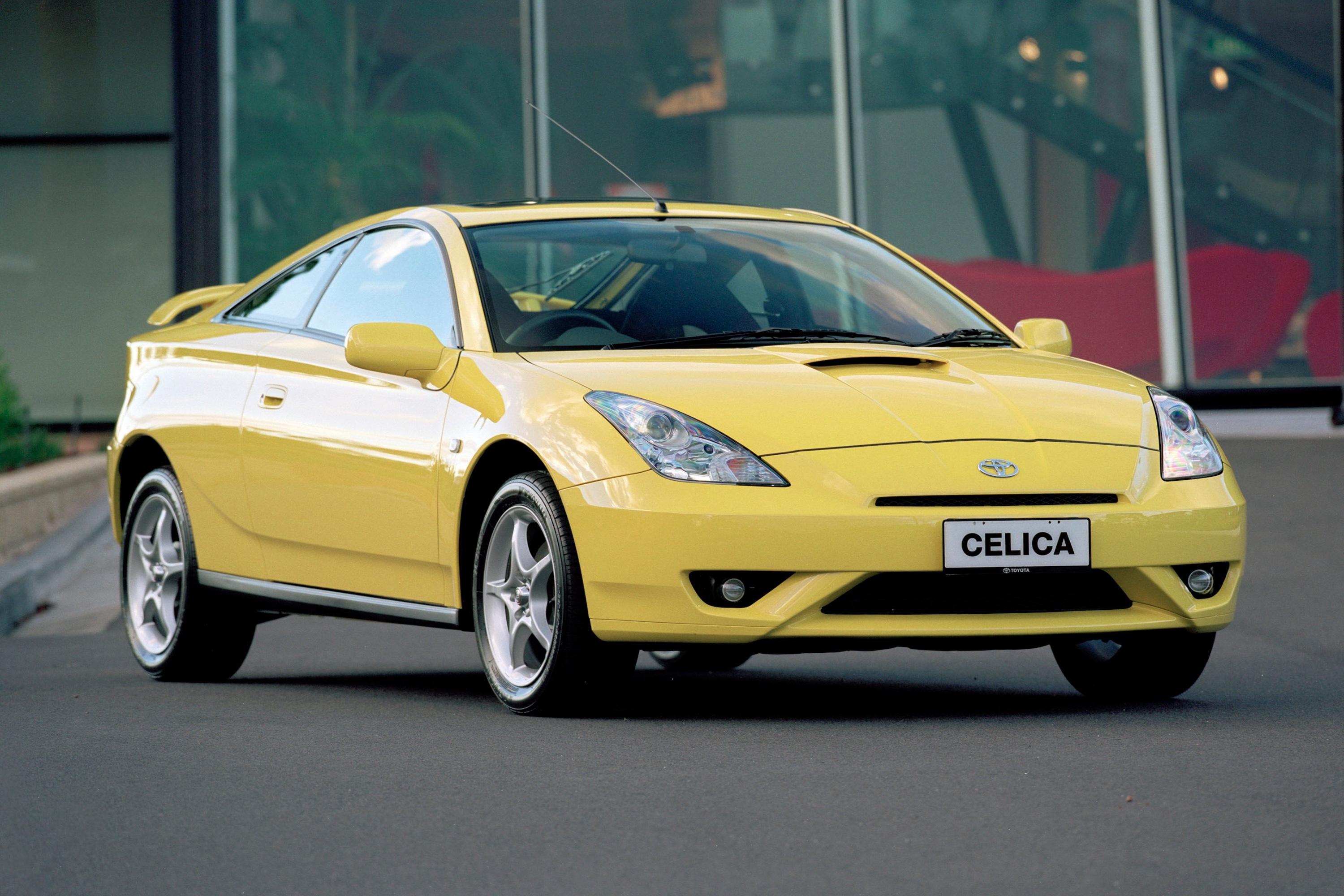
Image: The previous-generation Celica, sold in Australia between 1999-2005

For enthusiasts, both will offer a six-speed manual transmission, while an eight-speed automatic will be optional. 

Best Car Web also says the Celica will run the petrol engine only with around 400hp (298kW) and will use carbon fibre for the bonnet, front guards and roof panels to keep weight down.

In a twist, the Celica is said to have its engine mid-mounted – which Toyota previously did on its MR2 sports car, with MR denoting a ‘mid-rear’ engine location.

Toyota showed the GR Yaris M Concept at the Tokyo Auto Salon using the new engine mounted behind the rear seats, suggesting engineers are well advanced with the layout.

Image: The MR2 was last sold in 2005

Best Car Web reports it’ll be all-wheel drive. The first three generations of Celica were rear-wheel drive, until the front-wheel drive T160 was launched in 1985. However, this spawned a hot all-wheel drive GT-Four flagship, which was also offered for the following two generations.

The mid-mounted layout has fuelled speculation of the return on the MR2 name, but it’s unclear if Toyota will develop two different sports cars below the Supra, particularly considering it already offers the GR86.

It’s expected the Celica’s arrival won’t come at the expense of the GR86. Reports from US outlet Motor Trend in June 2025 suggested the GR86 will continue alongside the Celica and Supra in Toyota showrooms. 

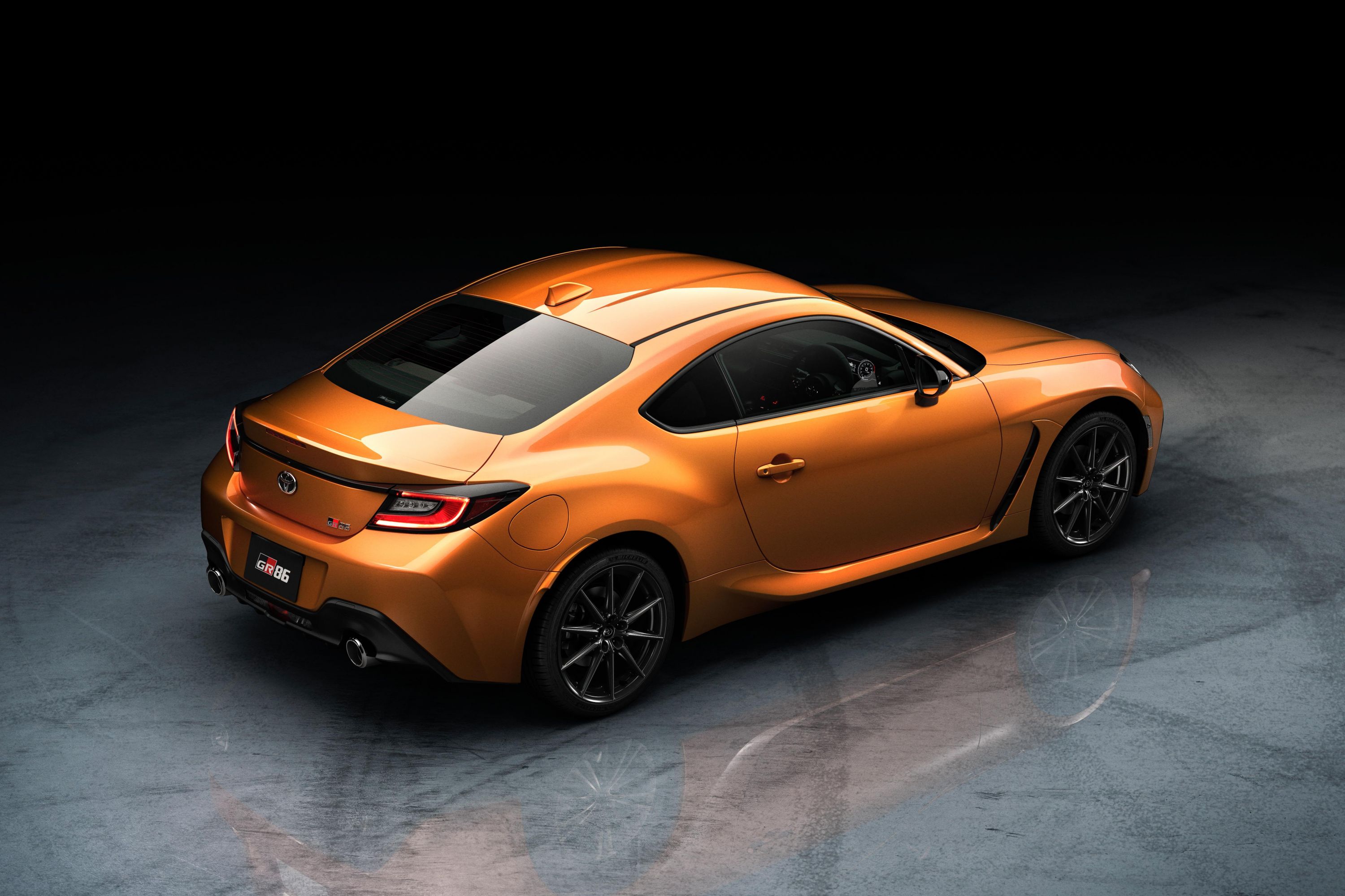
Image: The current, second-generation GR86

Toyota Motor North America product boss Cooper Ericksen told Motor Trend the GR86 “does serve a very important role for the company and [performance arm] GR, so it would be our intent to have a cool next generation”.

In Australia, the GR86 is used for a one-make racing series – split into two divisions – designed to develop and discover racing talent, making them sought-after track cars. 

With Toyota’s arrival in Supercars in 2026, the company has envisaged a junior driver following the pathway to Supercars, graduating from the TGRA 86 Series to the top-tier category. 

MORE: V8-powered Toyota GT Concepts preview new sports cars for track and road

MORE: Explore the Toyota Supra showroom

GWM Haval H6 gets even more hybrid, PHEV options to take on RAV4, Outlander

on September 01, 2025

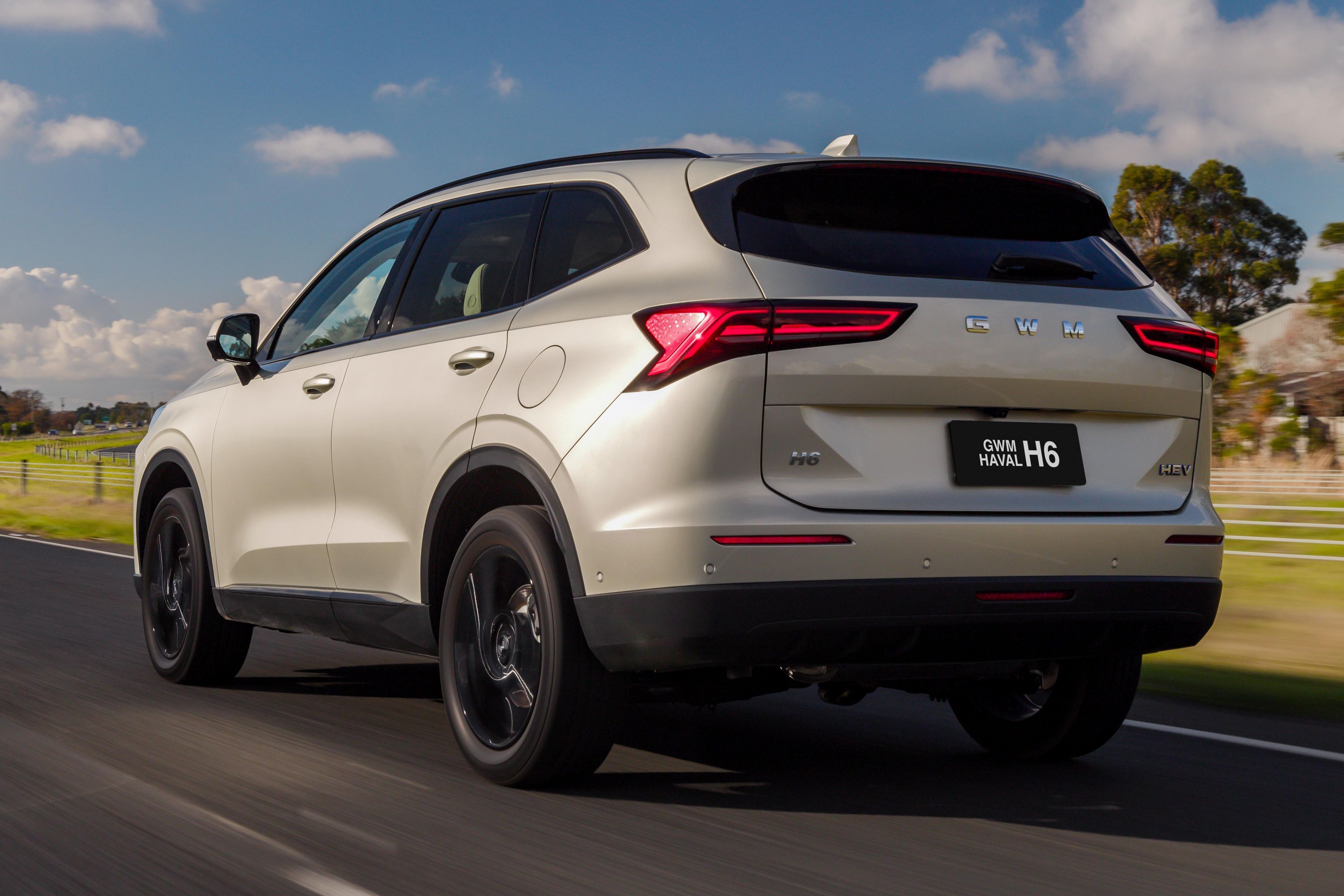
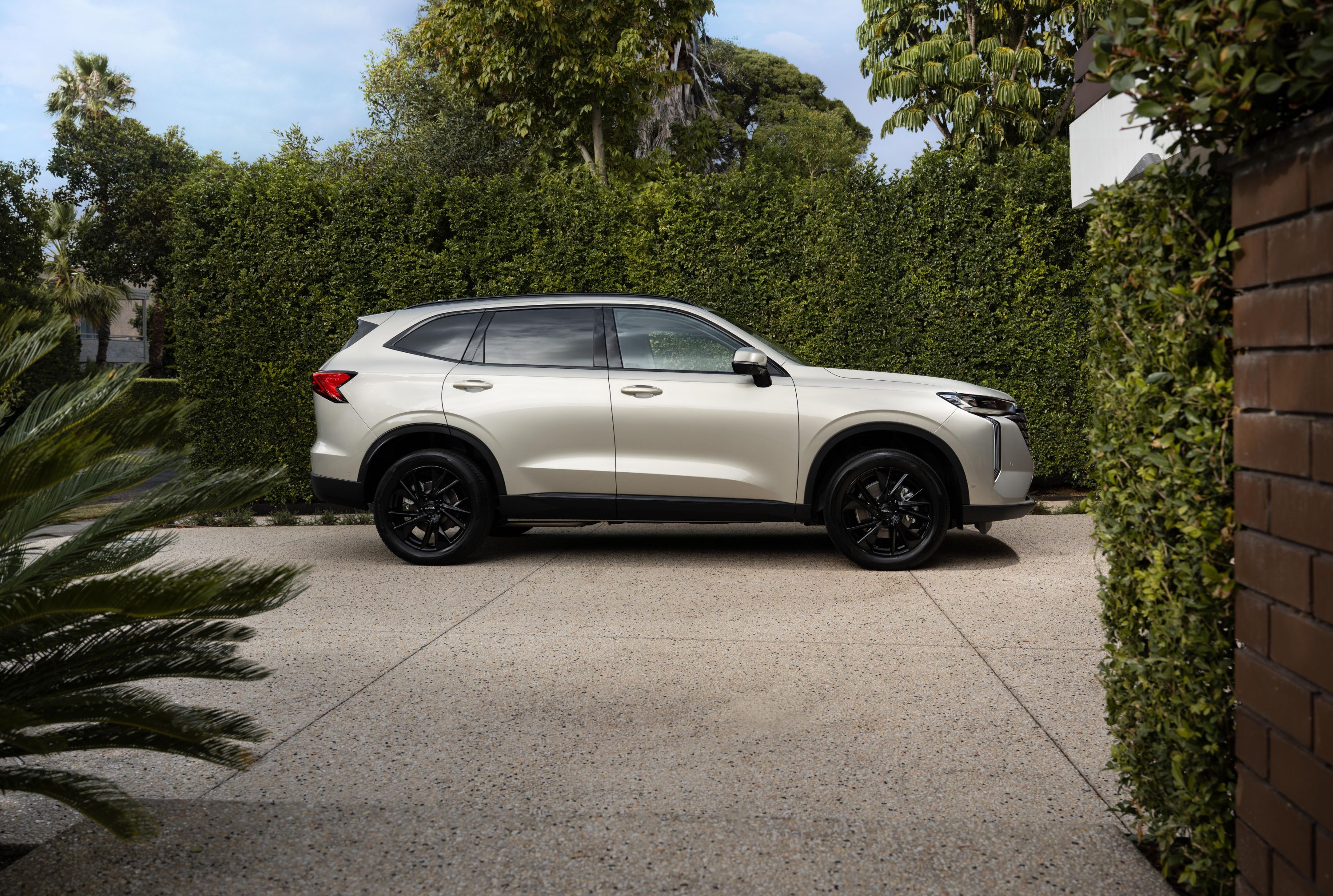
The hybrid-heavy 2025 GWM Haval H6 mid-size SUV lineup has gained even more electrified options.

The plug-in hybrid powertrain launched in Australia this year is now available in the entry-level Lux trim, while the familiar hybrid powertrain can now be had with all-wheel drive for the first time in Australia.

The latter gives GWM a direct rival for all-wheel drive hybrid versions of the top-selling Toyota RAV4 and the Nissan X-Trail, among others, with the new Ultra Hybrid AWD featuring the Hybrid Intelligent 4WD (Hi4) system from the PHEV including 80kW/170Nm front and 150kW/350Nm rear electric motors.

CarExpert can save you thousands on a new car. Click here to get a great deal.

The new front-wheel drive Lux PHEV is priced at $44,990 drive-away, or $3000 less than the Ultra PHEV FWD, while the Ultra AWD Hybrid costs $47,490 drive-away, or $3500 more than its front-wheel drive equivalent.

The wider GWM Haval H6 range is priced from $35,990 to $50,990 drive-away.

These additional variants, due in showrooms mid-way through this month, bring the number of members in the Haval H6 family to eight… and that doesn’t include the Haval H6 GT ‘coupe SUV’.

The new all-wheel drive hybrid is significantly punchier than its front-wheel drive counterpart. Here’s how they all compare:

SpecificationsPetrolHybridHybrid AWDPHEVPHEV AWD
Powertrain2.0L turbo 4cyl1.5L hybrid 4cyl1.5L hybrid 4cyl1.5L plug-in hybrid 4cyl1.5L plug-in hybrid 4cyl
Engine outputs170kW + 380Nm110kW + 230Nm110kW + 240Nm110kW + 240Nm110kW + 240Nm
Electric motor outputs130kW + 300Nm80kW + 170Nm (front)
150kW + 350Nm (rear)
130kW + 300Nm80kW + 170Nm (front)
150kW + 350Nm (rear)
System outputs170kW + 380Nm179kW + 530Nm268kW + 760Nm240kW + 540Nm268kW + 760Nm
Battery19.09kWh lithium iron phosphate19.09kWh lithium iron phosphate
Transmission9-speed dual-clutch autoDedicated Hybrid TransmissionDedicated Hybrid TransmissionDedicated Hybrid TransmissionDedicated Hybrid Transmission
Drive typeFront-wheel driveFront-wheel driveAll-wheel driveFront-wheel driveAll-wheel drive
Fuel economy (claimed)7.4L/100km5.2L/100km5.4L/100km1.0L/100km1.1L/100km
CO2 emissions170g/100km120g/100km125g/100km22g/100km22g/100km

PHEVs come with a larger 19.09kWh lithium iron phosphate (LFP) battery, and offer between 100km and 106km of electric-only range on the NEDC cycle.

All Haval H6s run on 91-octane regular unleaded fuel.

You can get hybrid and plug-in hybrid powertrains in either front- or all-wheel drive, though the 2.0-litre turbocharged four-cylinder petrol engine is only offered with front-wheel drive despite an all-wheel drive option being offered before this year’s facelift.

GWM confirmed at the updated model’s July launch that it expects the PHEV to account for more than 20 per cent of Haval H6 deliveries, with hybrids expected to account for 60 per cent of sales and petrol variants to make up the remaining 20 per cent.

In the Haval H6 GT, which is offered here only with petrol or plug-in hybrid power, there’s a 50/50 split in sales.

The range expansion follows a facelift that brought a raft of styling changes inside and out, a new transmission for petrol variants and more standard equipment, among other equipment.

For context, here’s what the Haval H6 offers in its two trim levels:

The Lux comes standard with the following equipment:

  • 19-inch black alloy wheels
  • Automatic LED headlights
  • Automatic high-beam
  • Rain-sensing wipers
  • Power-folding, heated exterior mirrors
  • Puddle lights
  • Electronic parking brake + auto hold
  • Hands-free power tailgate (excludes petrol Lux)
  • Proximity entry with push-button start
  • 14.6-inch touchscreen infotainment system
  • Wireless Apple CarPlay and Android Auto
  • DAB+ digital radio
  • 8-speaker sound system
  • 10.25-inch digital instrument cluster
  • Microfibre, leather-wrapped steering wheel
  • 4-way steering column adjustment
  • Leatherette upholstery
  • 6-way power driver’s seat
  • Dual-zone climate control with rear vents
  • 50W wireless phone charger
  • 2 x front USB outlets
  • 2 x rear USB outlets
  • 2 x 12V outlets (1 x front, 1 x boot)
  • Cargo cover
  • Adaptive cruise control
  • Autonomous emergency braking
  • Pedestrian and cyclist detection
  • Junction assist
  • Driver fatigue monitoring
  • Hill ascent and descent control
  • Blind-spot monitoring
  • Emergency lane-keep asisst
  • Lane-keep assist
  • 360-degree cameras with 180-degree transparent chassis mode
  • Rear parking sensors
  • Traffic jam assist
  • Traffic sign recognition
  • Tyre pressure monitoring
  • 7 x airbags

The Ultra adds:

  • Front parking sensors
  • Rear privacy glass
  • Panoramic sunroof
  • Semi-autonomous parking and reverse assist (excludes PHEV)
  • Head-up display
  • Heated steering wheel
  • Heated and ventilated front seats
  • Driver’s seat memory and welcome
  • Driver’s seat lumbar
  • 4-way power passenger seat
  • Front stainless steel scuff plates
  • 8-speaker (hybrid) or 9-speaker (petrol, PHEV) sound system

Pricing

ModelDrive-away pricing
2025 GWM Haval H6 Lux 2.0T FWD$35,990
2025 GWM Haval H6 Ultra 2.0T FWD$38,990
2025 GWM Haval H6 Lux Hybrid FWD$40,990
2025 GWM Haval H6 Ultra Hybrid FWD$43,990
2025 GWM Haval H6 Lux PHEV FWD$44,990 (NEW)
2025 GWM Haval H6 Ultra Hybrid AWD$47,490 (NEW)
2025 GWM Haval H6 Ultra PHEV FWD$47,990
2025 GWM Haval H6 Ultra PHEV AWD$50,990

MORE: Explore the GWM Haval H6 showroom

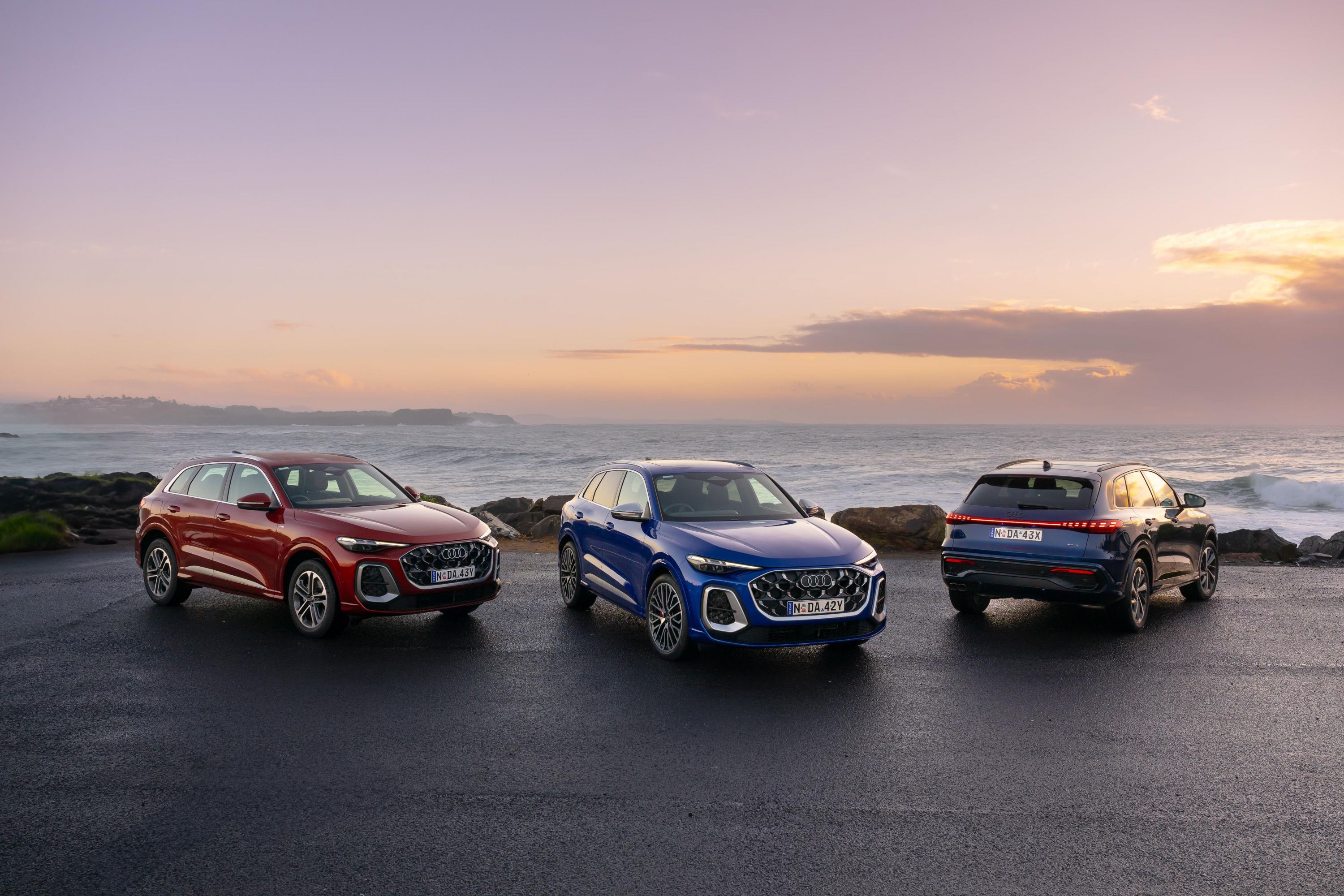
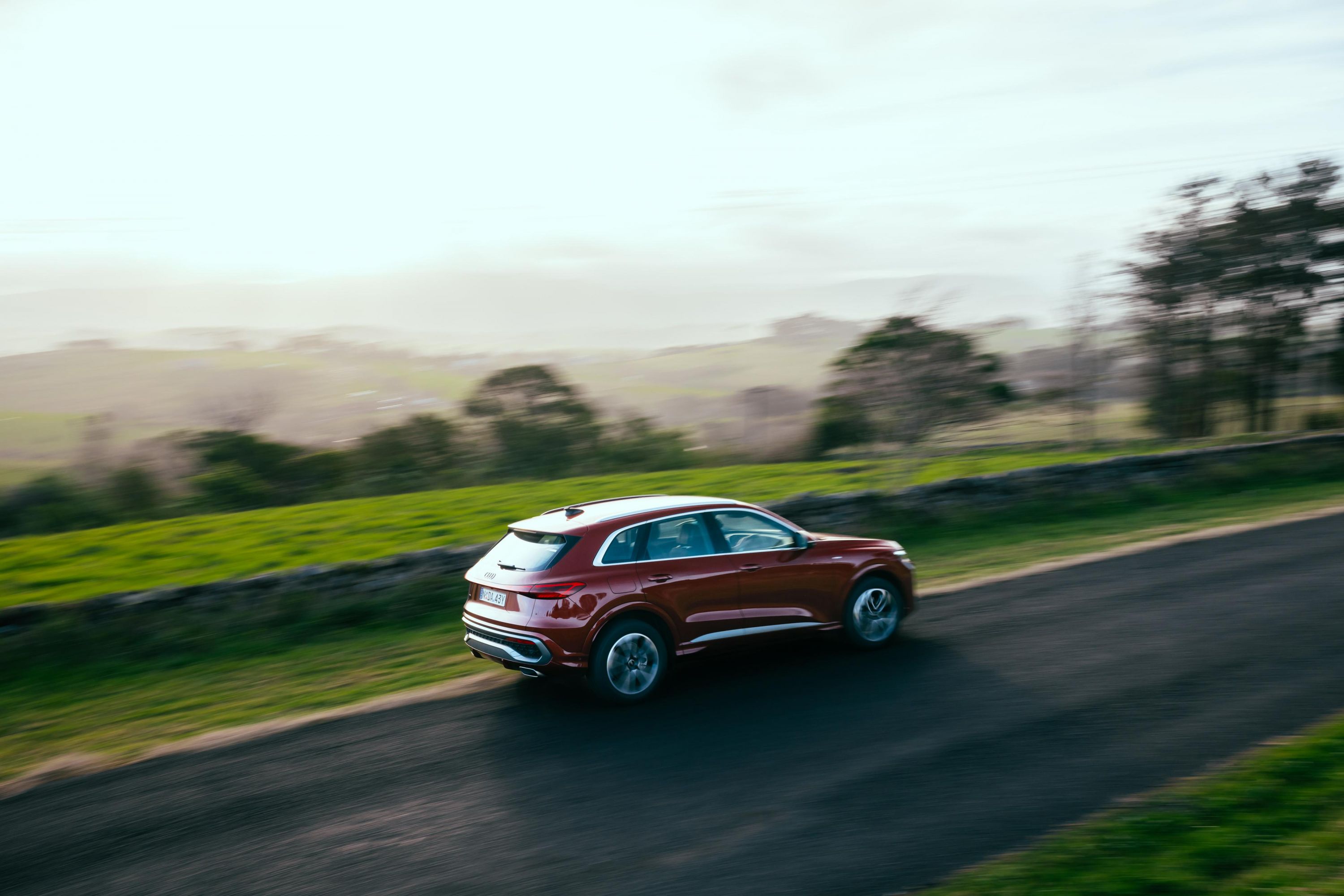
2026 Audi Q5 review: Quick drive

on September 01, 2025

Audi has made no secret about the importance of the Q5 mid-size SUV to its lineup, both here in Australia and around the world.

Since the original was launched in 2009, the Audi Q5 has found around 1.6 million homes globally over its first two generations, and some 25,000 customers in Australia.

Audi’s local managing director, Jeff Mannering, says the Q5 is “critical to [its] success” in the Australian market, so much so that the third-generation model’s Australian media launch was held alongside the German brand’s national dealer and investor conference on the Gold Coast recently.

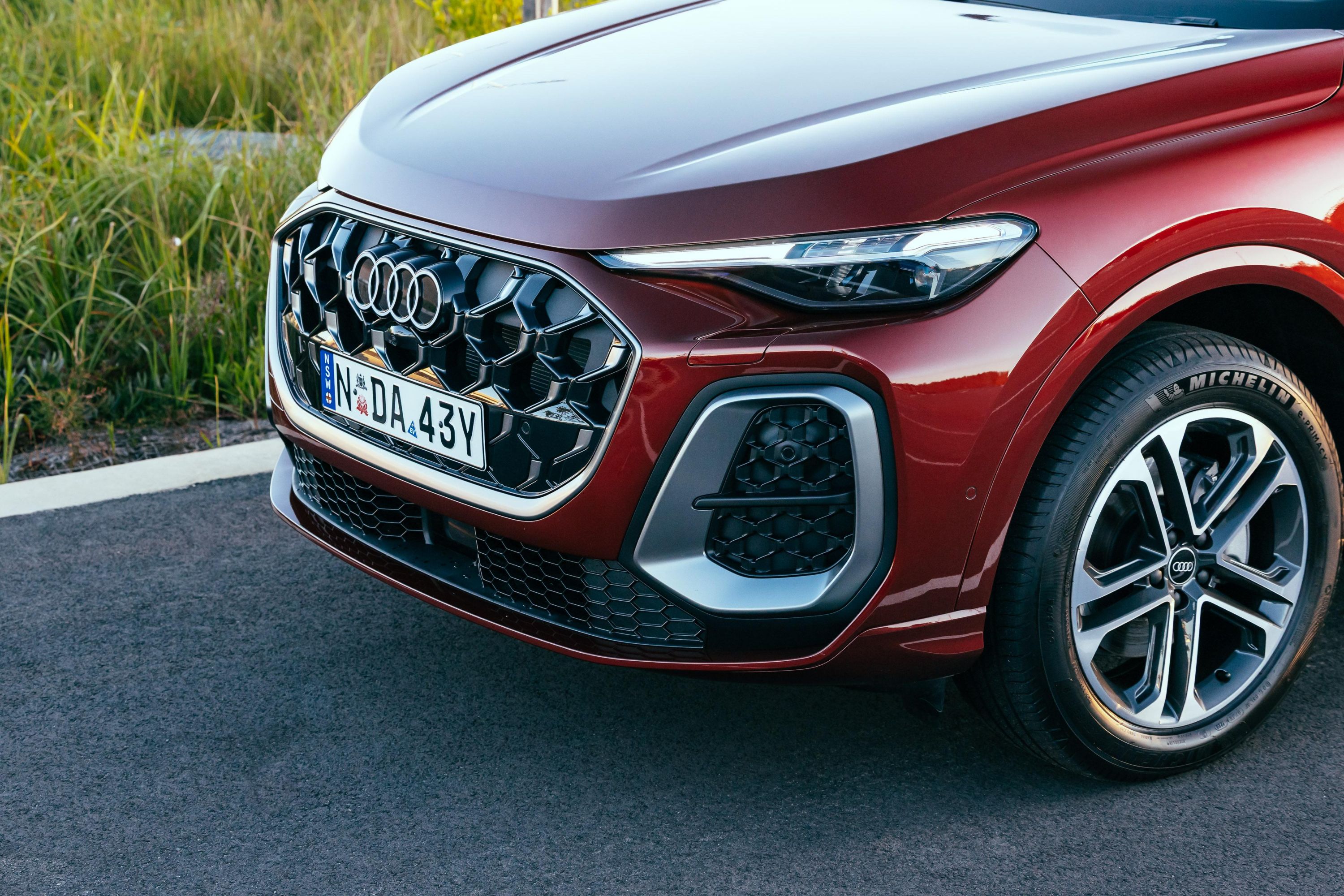
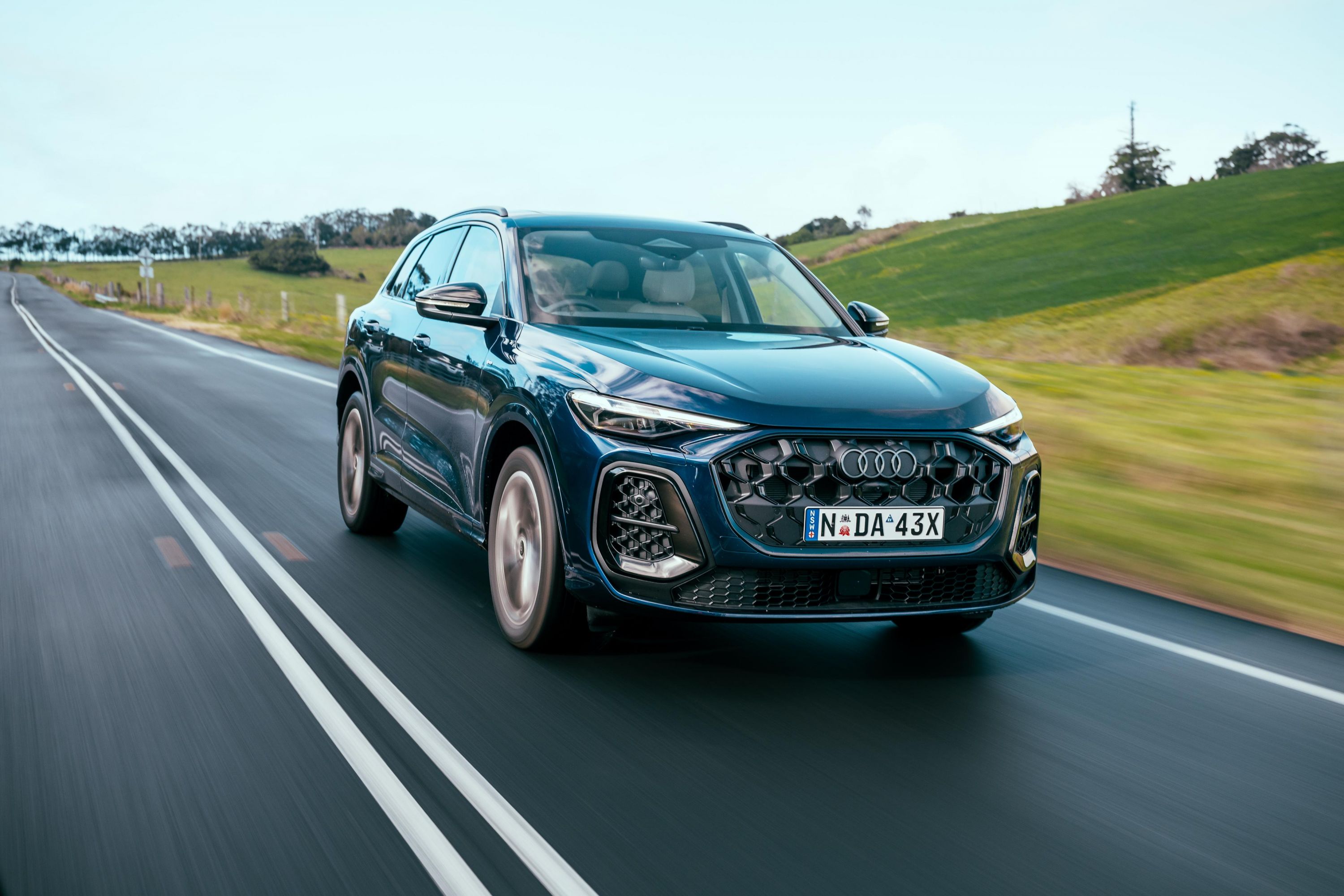
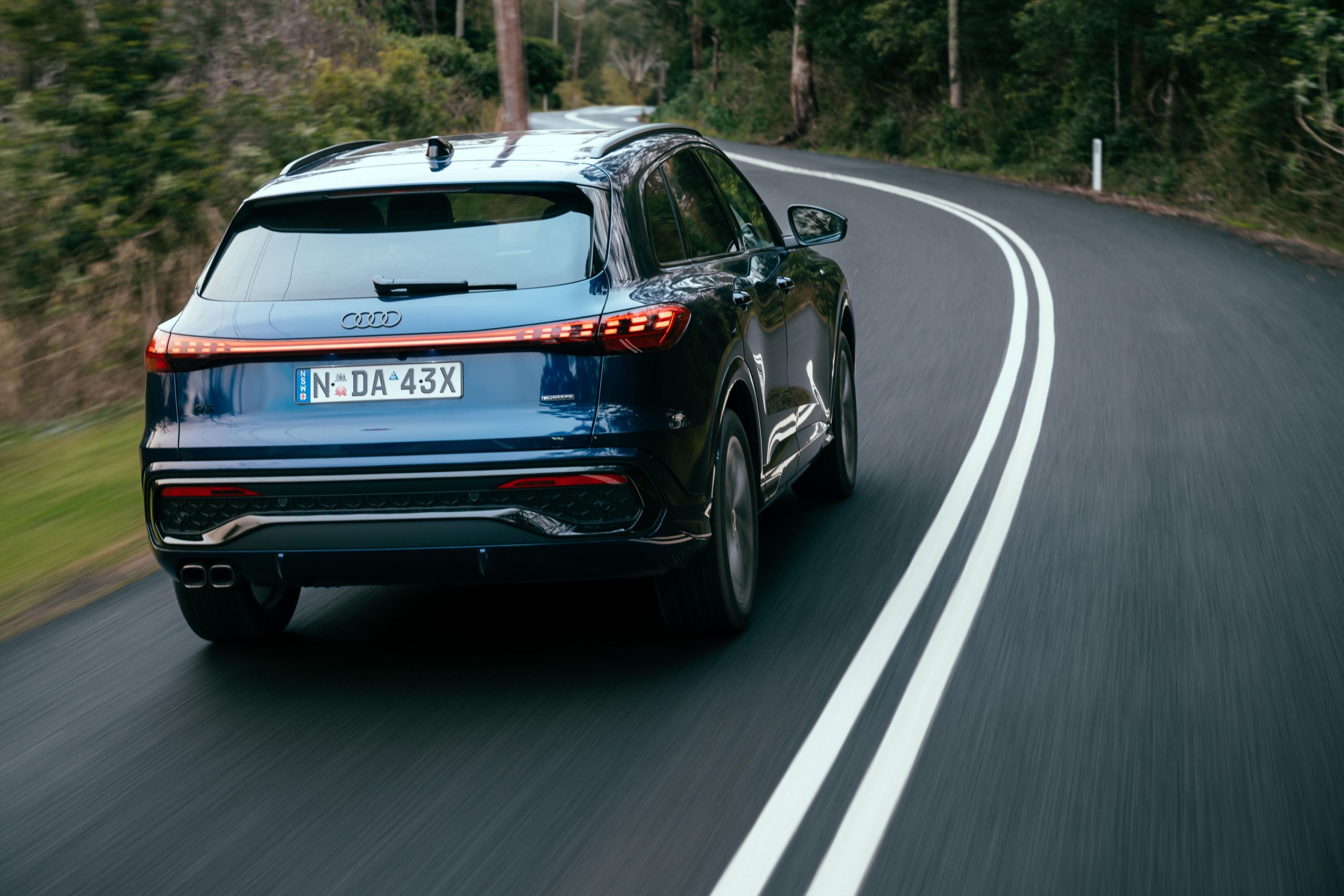
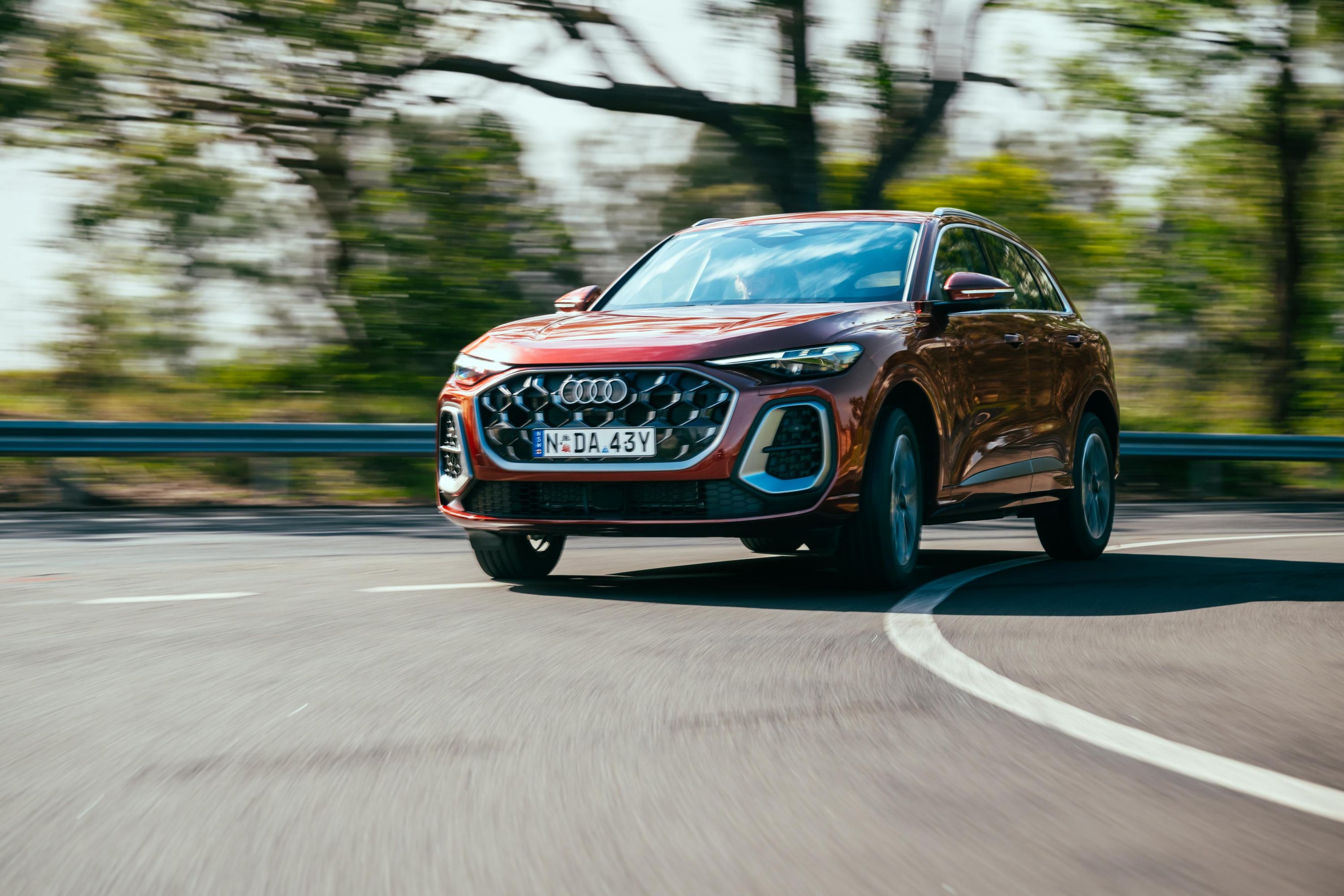
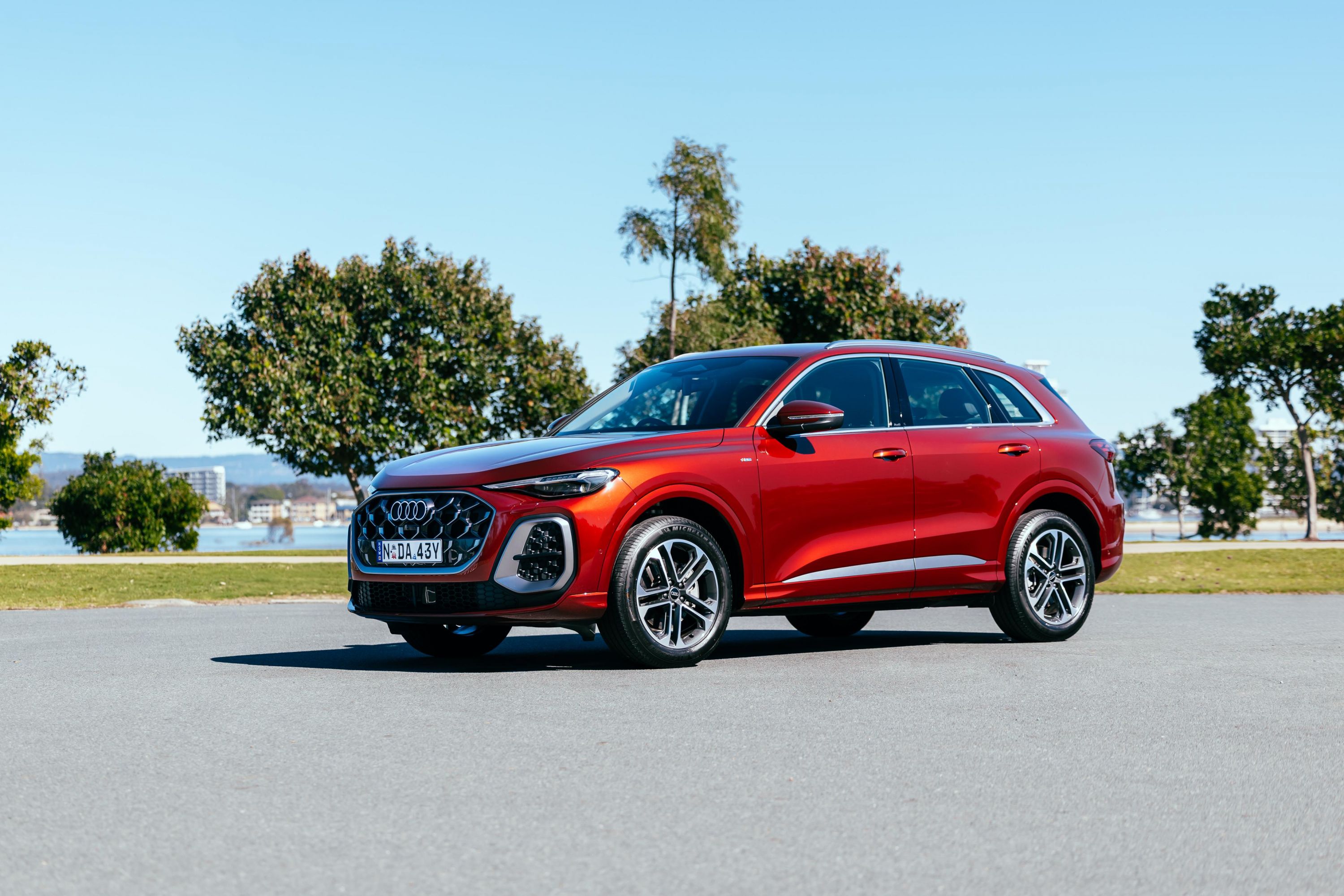
This new Q5 is perhaps the most significant change to the nameplate since its inception. It’s the first Audi SUV to ride on the company’s heavily revised Premium Platform Combustion (PPC) architecture, which is shared with the new A5 Sedan and Avant, bringing the marque’s latest design language and on-board technologies.

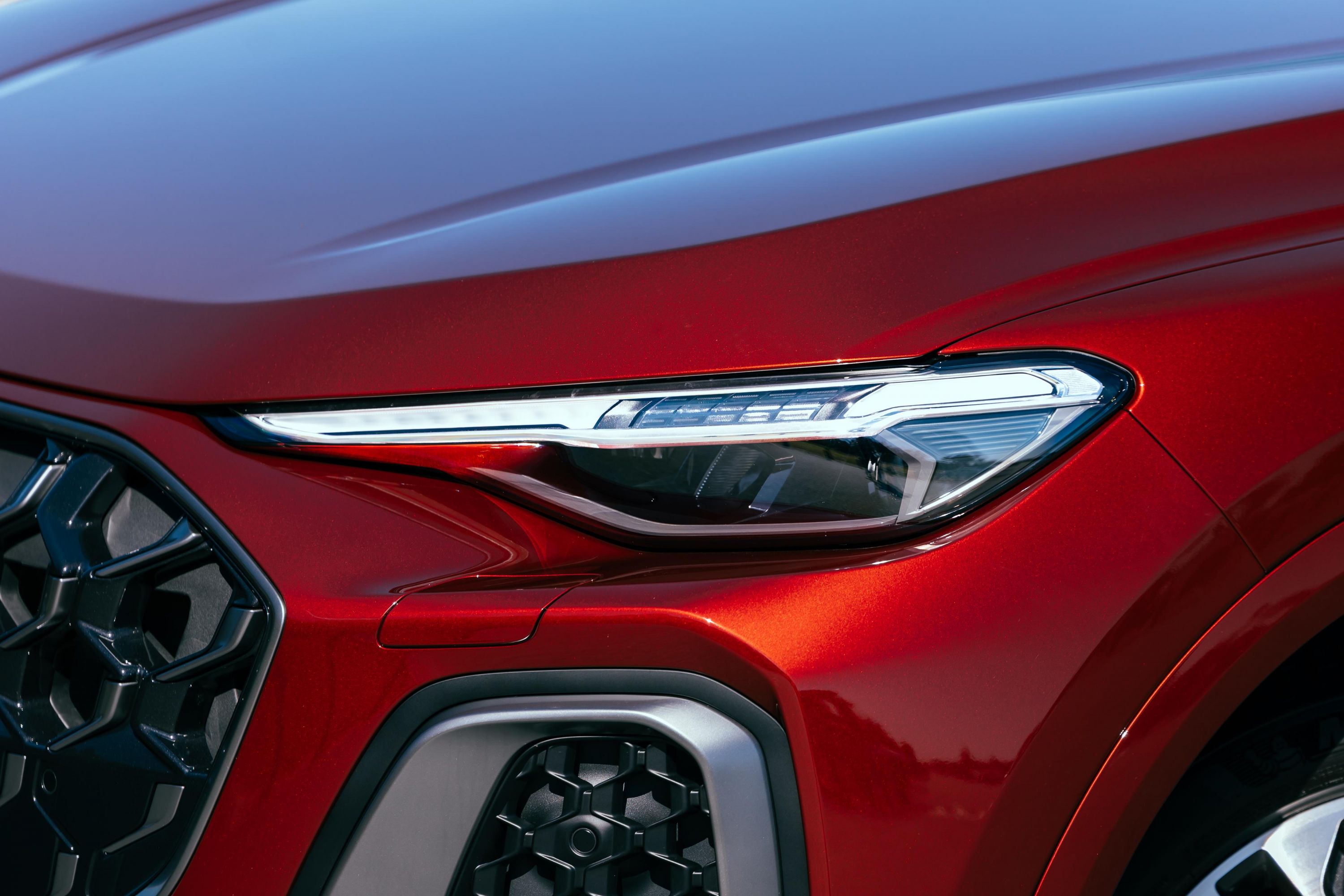
It’s also all-electrified, with the launch range comprising entirely of 48V mild-hybrid ‘MHEV plus’ drivetrains that allow you to drive in EV mode at low speeds, from the entry-level Q5 four-cylinder TFSI 150kW to the flagship SQ5 TFSI. A new e-hybrid (plug-in hybrid) powertrain will join the lineup later on, boasting up to 100km of WLTP-certified electric range.

We attended the Australian press launch in Queensland to get a first drive of the brand’s “critical” new mid-size SUV on local roads, where we had relatively short stints behind the wheel of all three engine variants.

Does the new 2026 Audi Q5 range have what it takes to reclaim its top spot on the sales charts ahead of rivals like the BMW X3 and Mercedes-Benz GLC, among others?

How much does the Audi Q5 cost?

Base pricing for the new Audi Q5 has risen by almost $8000 over its predecessor, with the entry-level TFSI 150kW kicking things off at $81,000 plus on-road costs.

ModelPrice before on-road costs
2025 Audi Q5 TFSI$81,000
2025 Audi Q5 TDI quattro$87,600
2025 Audi Q5 TDI quattro sport$94,100
2025 Audi SQ5 edition one$106,400
2025 Audi SQ5$122,400

While prices are up across the board, Audi Australia says standard equipment is up substantially from base level, claiming around $10,000 worth of extra value in addition to the new engines with more sophisticated 48V MHEV tech.

The Q5 also still undercuts the BMW X3 (priced from $86,000) and Mercedes-Benz GLC (from $89,000) by thousands of dollars, though the Volvo XC60 can be had from $74,990 before on-road costs.

Later this year the new Audi Q5 Sportback will also join the lineup, while plug-in e-hybrid versions will likely launch sometime in 2026.

To see how the Audi Q5 lines up against the competition, check out our comparison tool

What is the Audi Q5 like on the inside?

The new Q5 draws heavy inspiration from the lower-slung A5 range as well as the similarly-sized Q6 e-tron SUV.

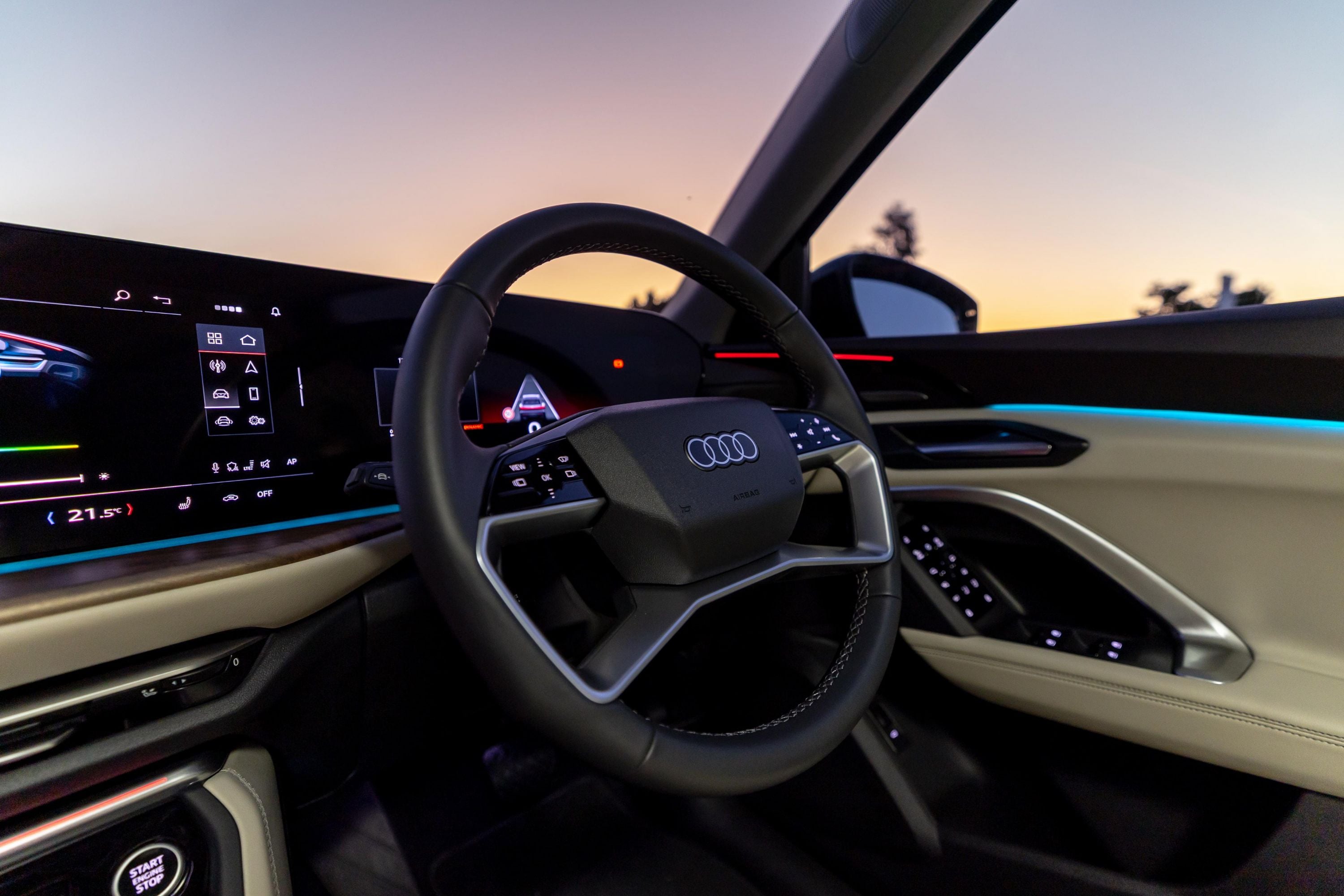
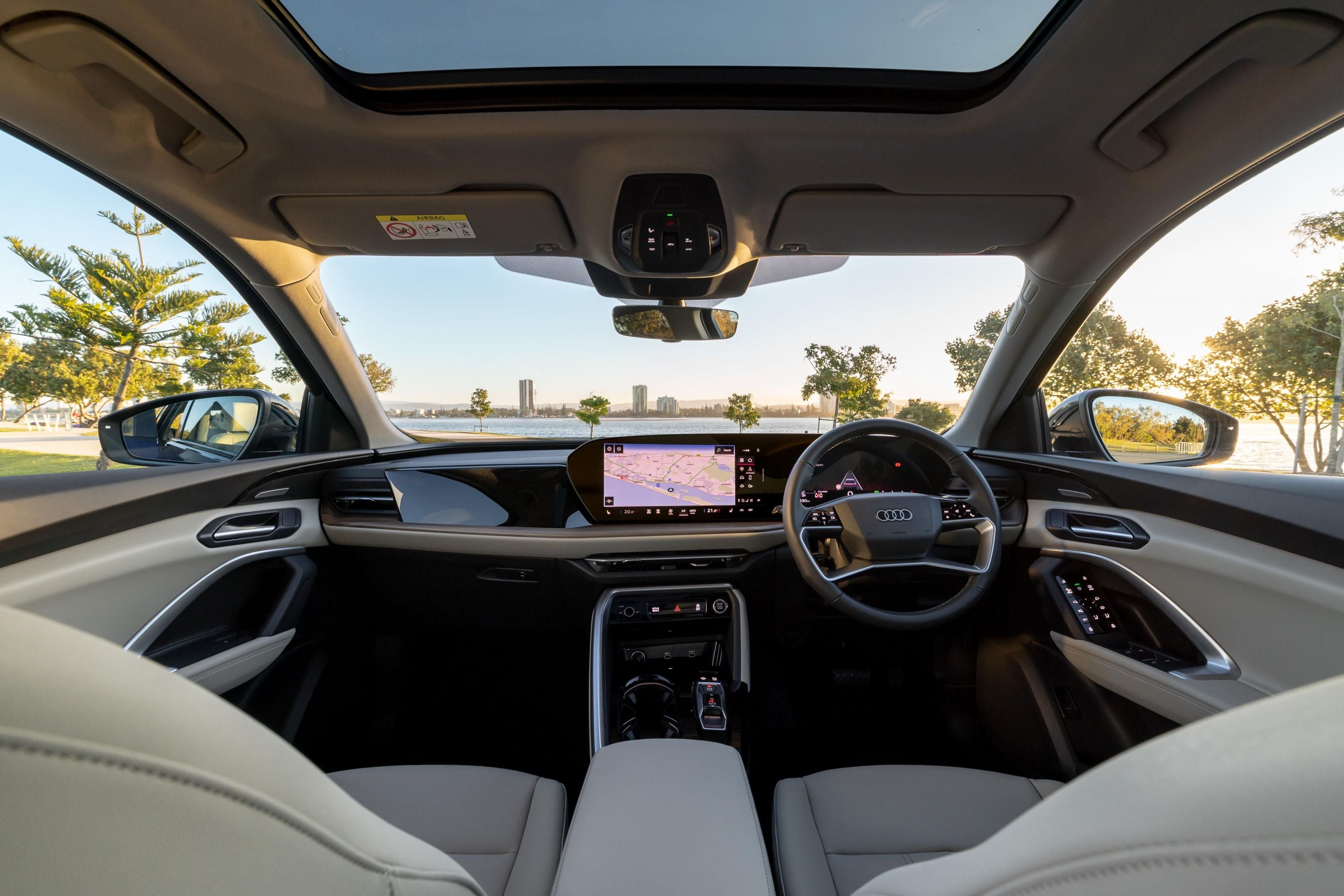
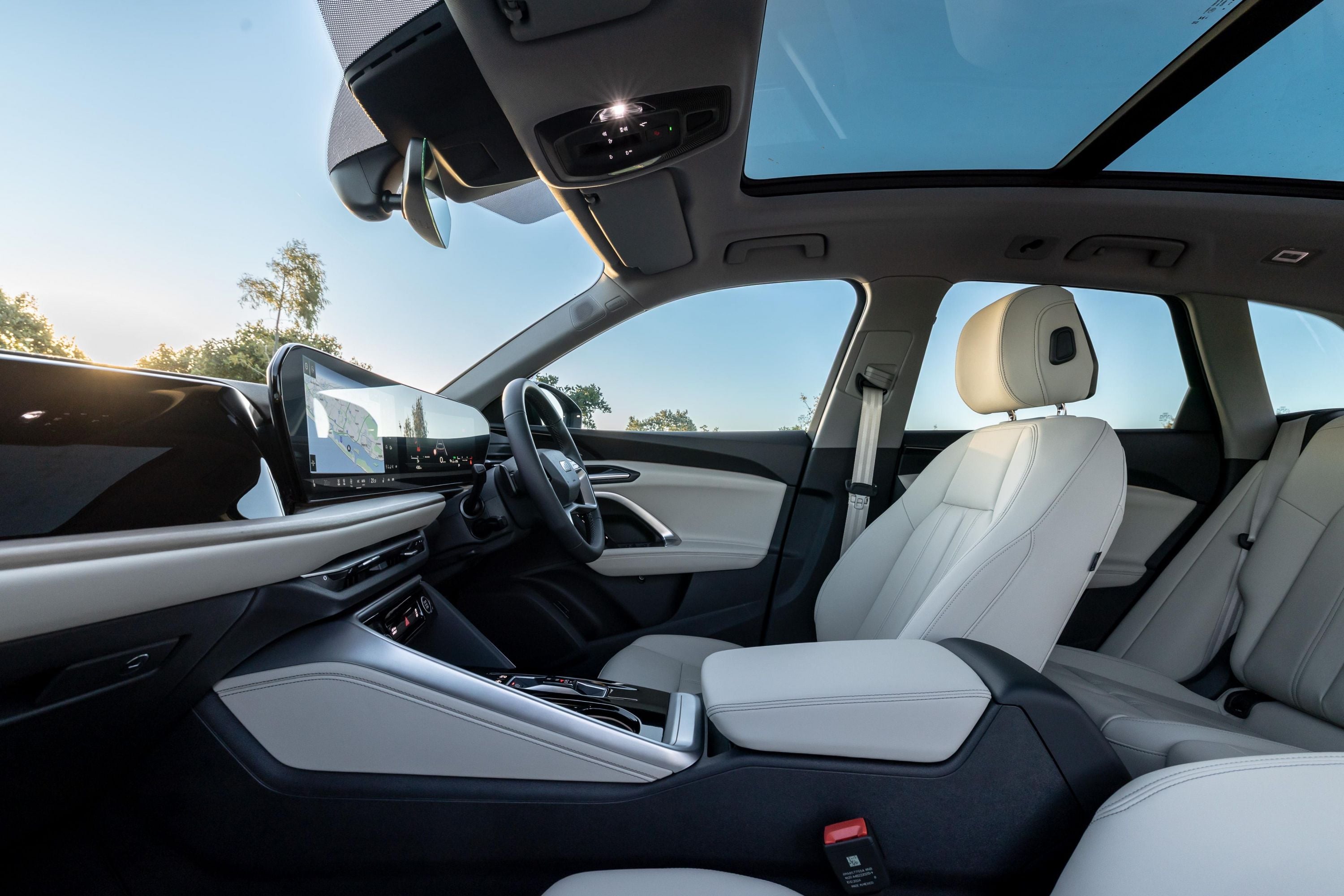
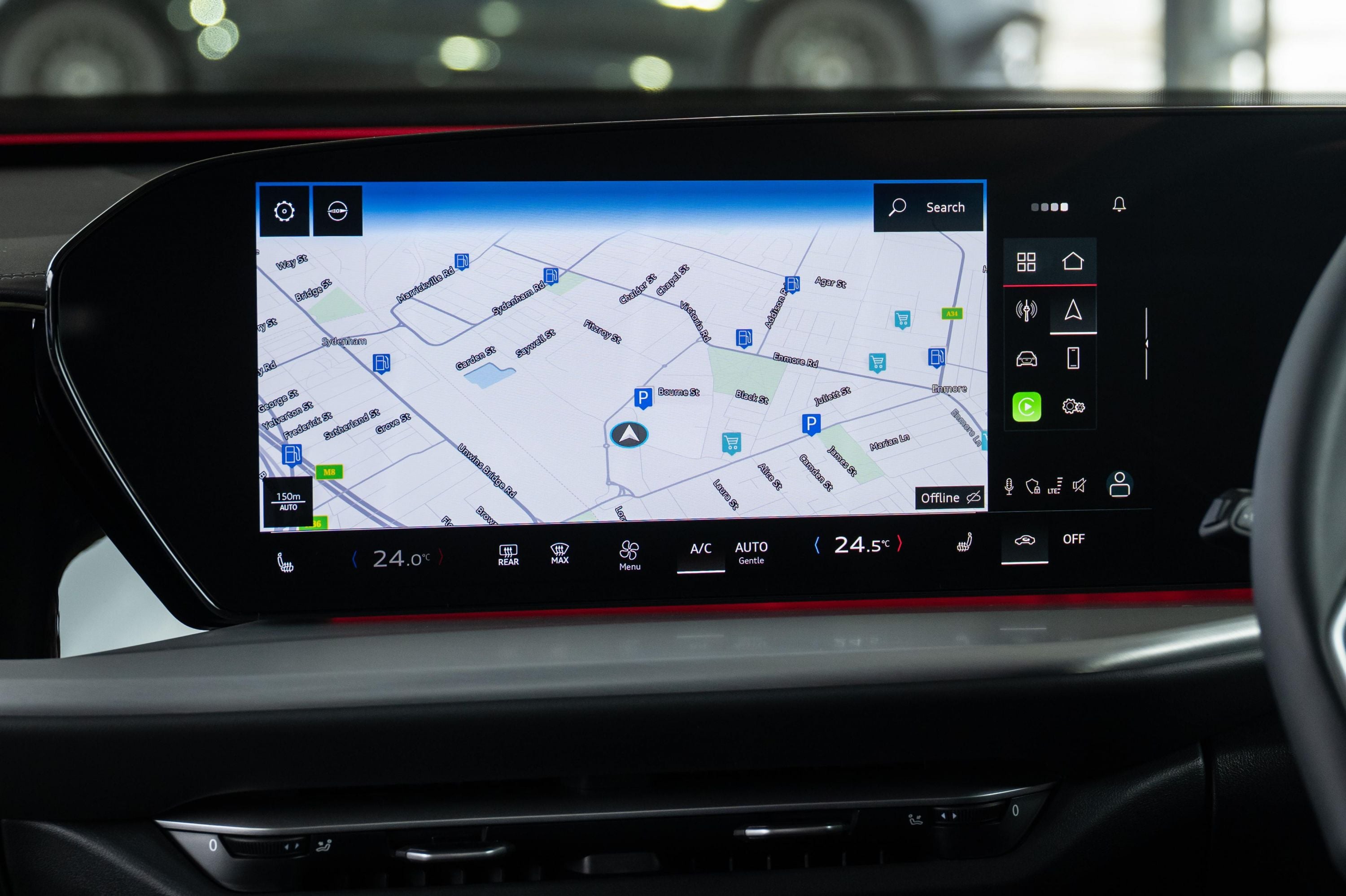
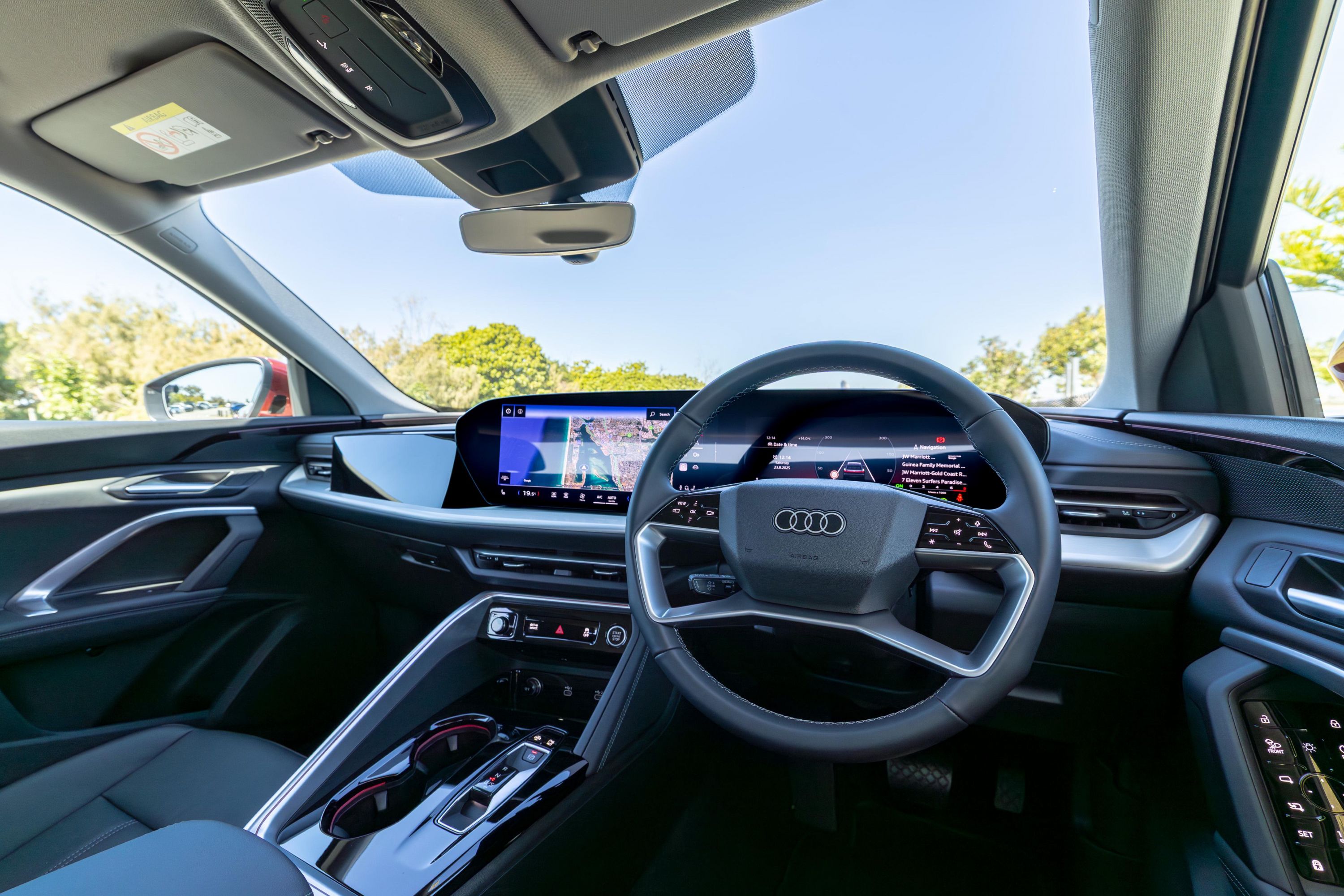
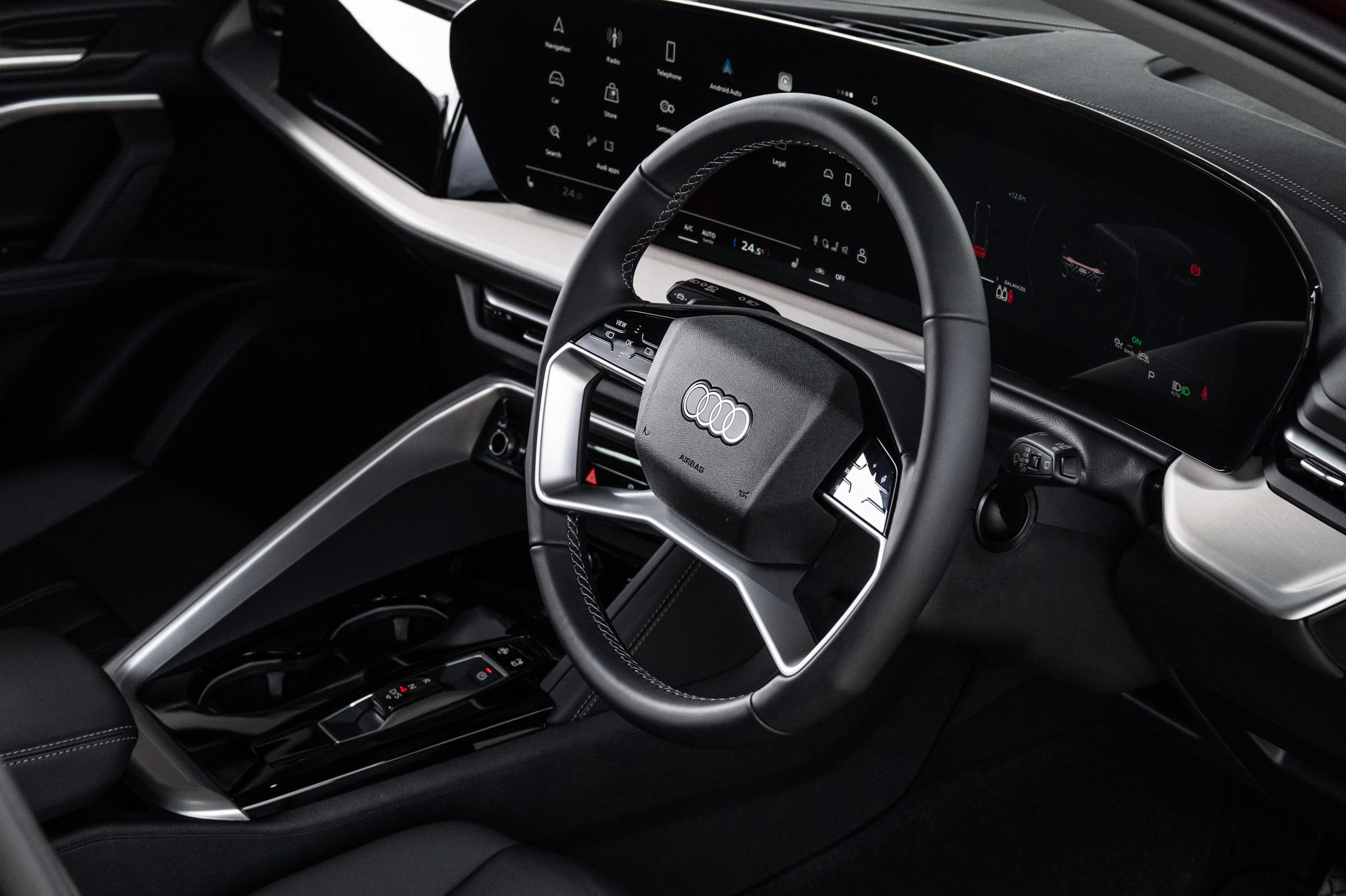
Audi’s latest display tech is front and centre, dubbed the ‘Digital Stage’ and running the brand’s latest user interface, all housed in glossy black bezeling.

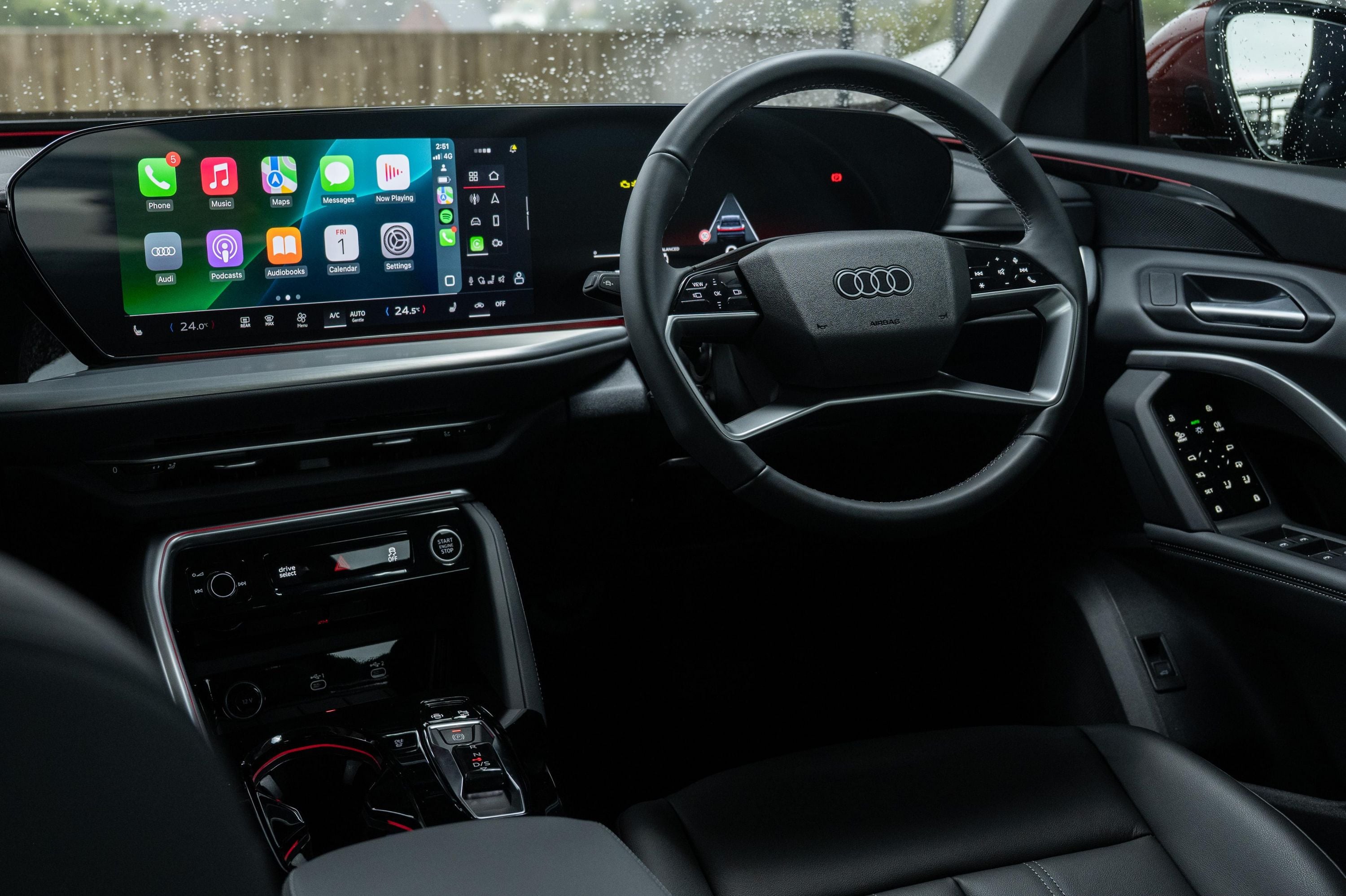
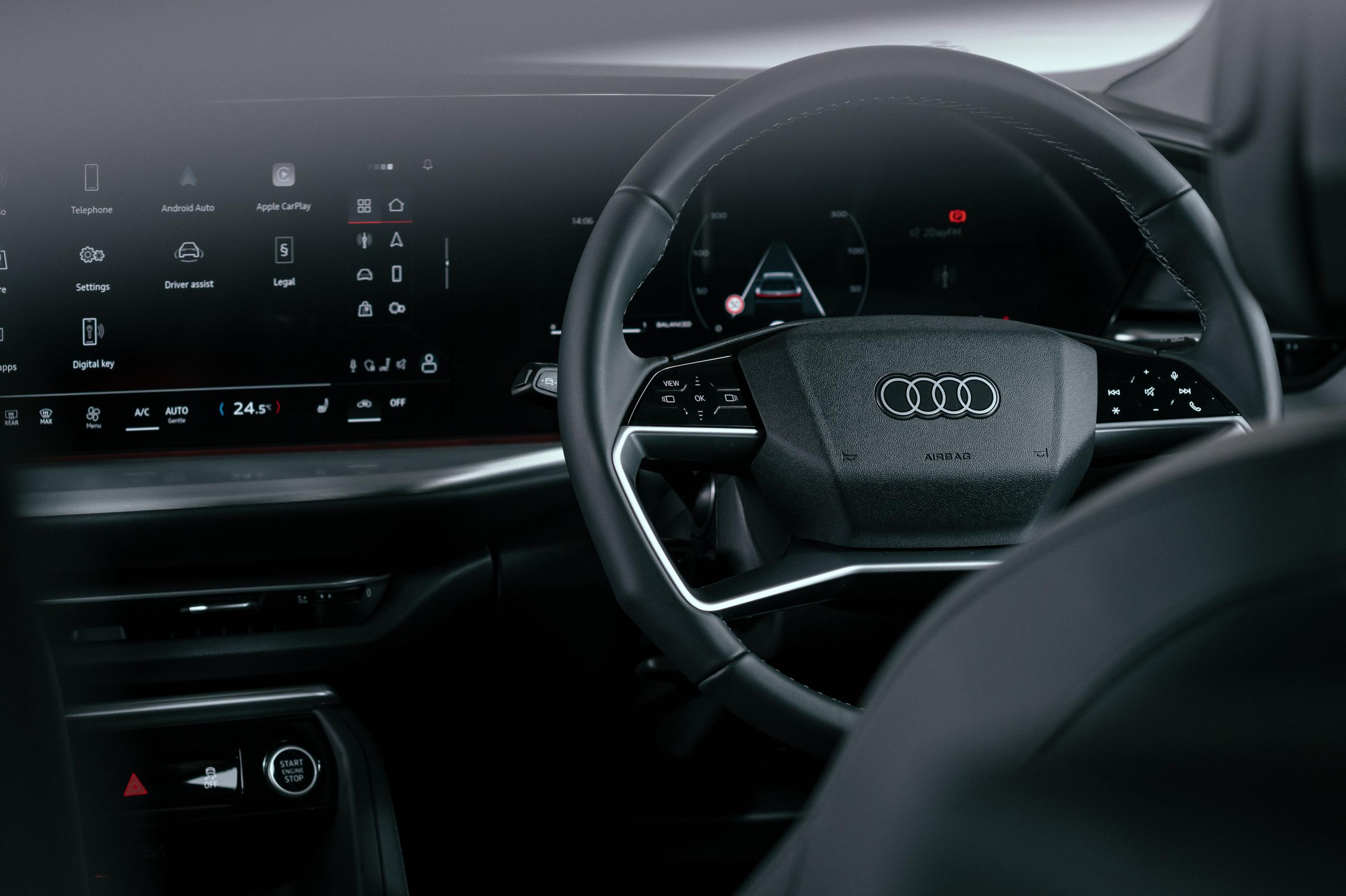
The driver is faced with a new four-spoke steering wheel which sits ahead of the new 11.9-inch ‘virtual cockpit’ digital instrument cluster, which is housed in the same free-standing panoramic display unit as the central 14.5-inch MMI touchscreen infotainment system.

Both screens feature OLED technology for better brightness, depth and clarity, and on first impressions are quite attractive and fairly easy to get your head around, even if you’re used to Audi’s far simpler previous-gen interface.

I personally am not enamoured by the new virtual cockpit layout, which throws out the previous conventional speedo and tacho dials in favour of a new videogame-esque adaptive central display with live assist tech view in the middle. One nice addition, however, is the integration of smartphone maps into the sidebar widgets.

As experienced in the A5 as well as the Q6 e-tron, the new interface largely presents well with swish graphics and animations, and while the climate controls are now digital they’re permanently on the base of the display.

While I lament Audi giving into the virtual A/C trend, the good news is that it’s still one of the better implementations out there. The ledge below the screen helps as a rest for your hand when you’re attempting to make touch inputs on the move, and there’s a satisfying haptic feedback.
Same goes for the steering wheel controls, which look like glossy touch-capacitive units but the haptic feedback makes them feel like real buttons. That said, I do miss the clickiness of Audi’s previous-gen buttons.
You can also opt for the MMI passenger-side display in the Q5 sport as part of the $5700 Tech pro package. It effectively extends the central interface with app and streaming functionality, and a privacy filter to avoid distracting the driver, though like I’ve said previously the 10.9-inch display seems a little naff.

Build quality feels pretty good, especially compared to the last-gen Q5 which was a little hard and scratchy in areas. It’s not a patch on the general ambience of the Q8, but feels good compared to something like an X3 or GLC…

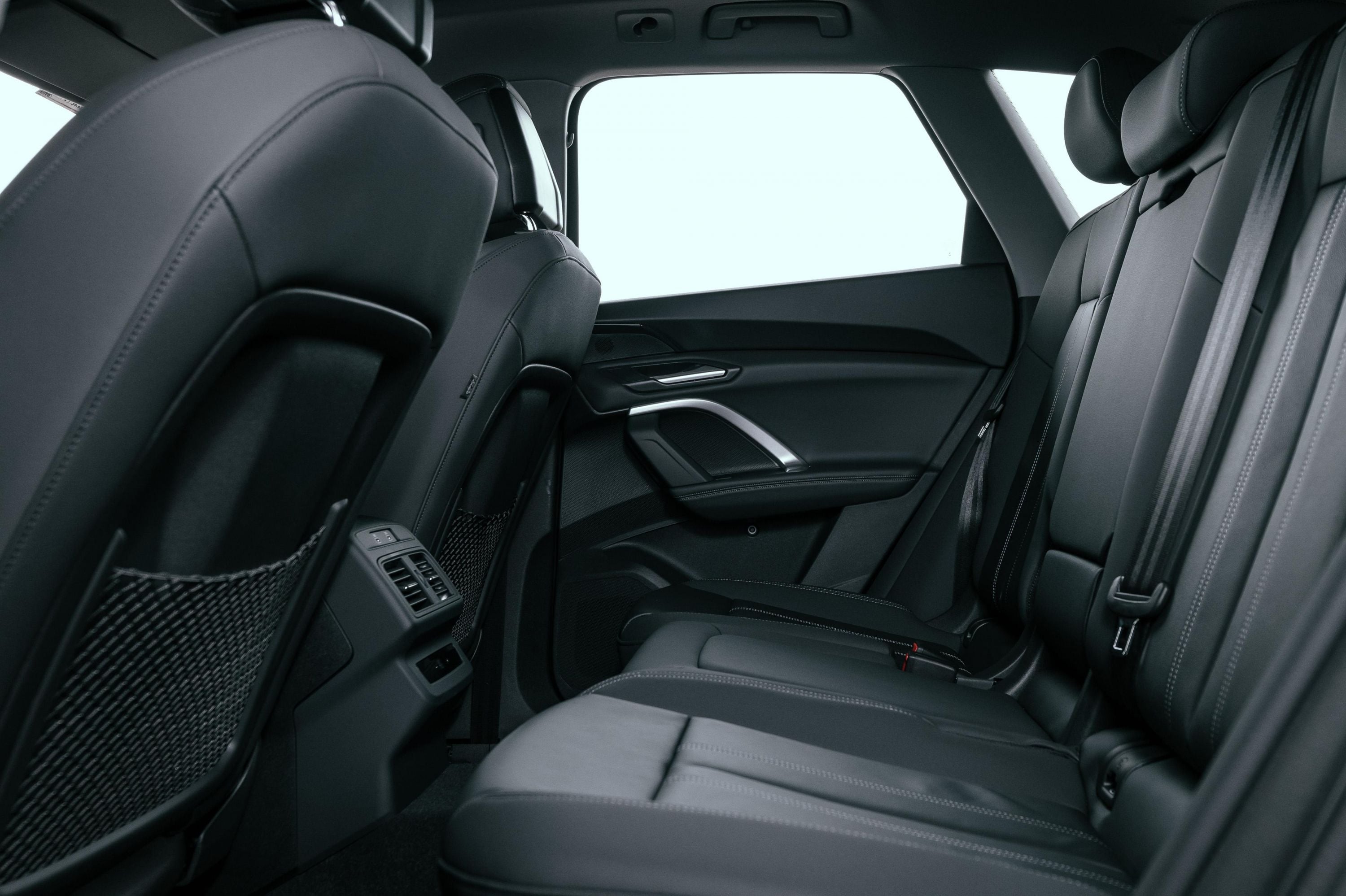
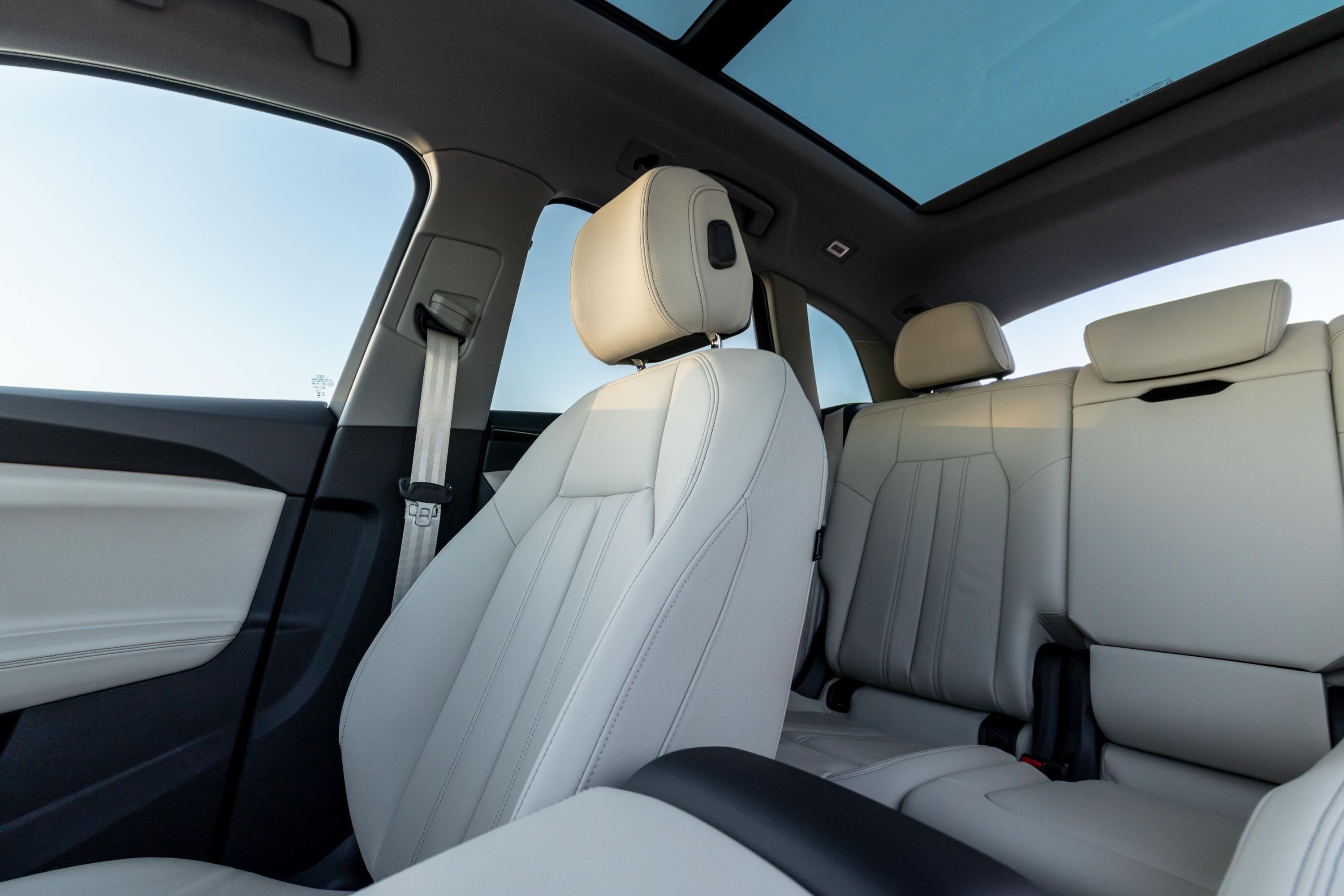
The rear seats aren’t as big as you might expect, despite the Q5’s gain in overall length (+35mm). It’s worth noting the wheelbase is near unchanged at 2820mm (+1mm).

Behind a taller driver like 6’1″ me, there’s adequate room for a similarly sized adult but it’s not stand-out. There’s decent leg and foot room, but your knees will be fairly close to the seat in front – even if it has scalloped backs.

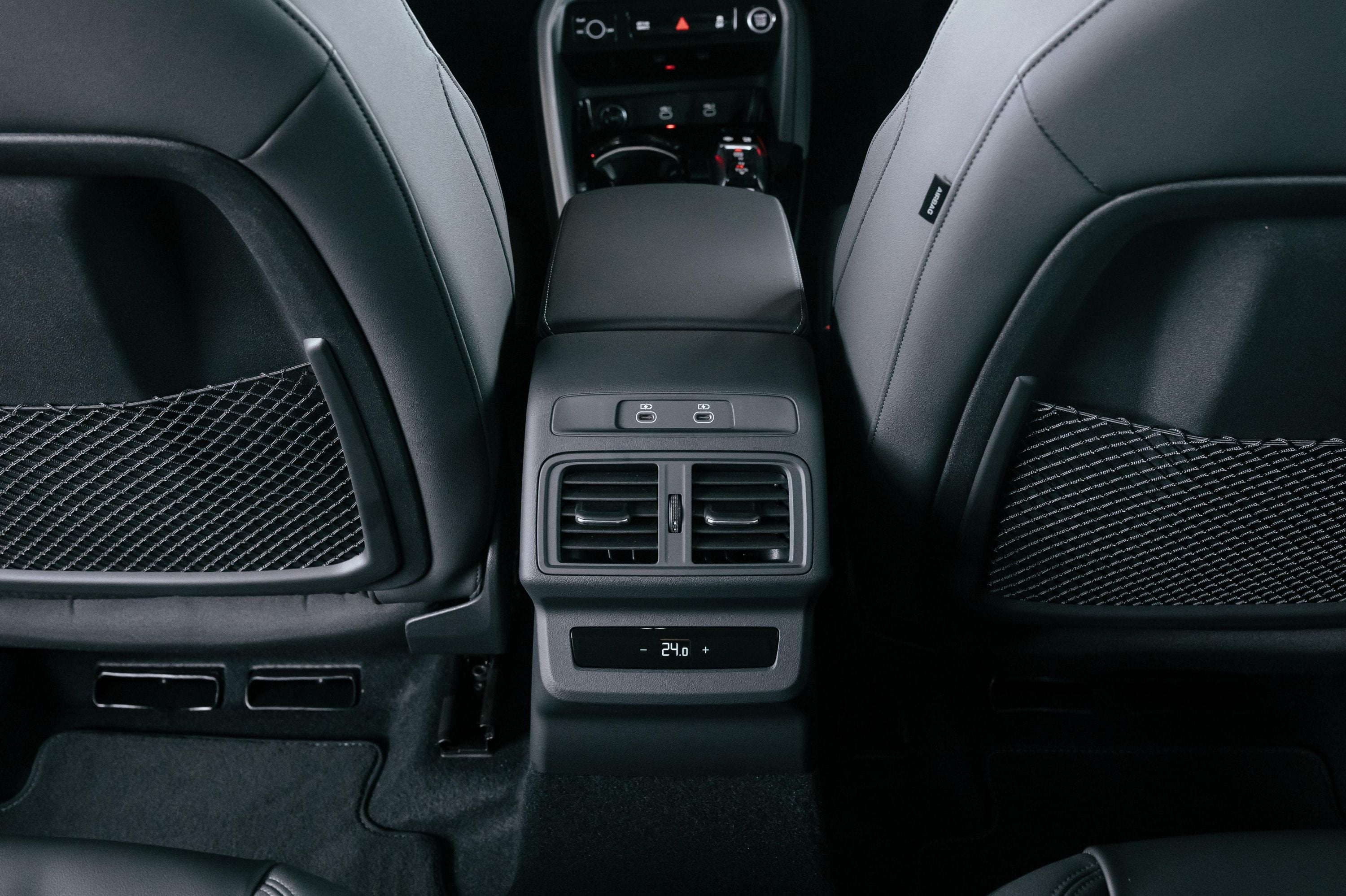
Rear amenities are solid though, with a third zone of climate control and directional vents fitted as standard, as are a pair of USB-C charge ports which can be upgraded to 100W with the Premium package to charge laptops.

You also get net-type map pockets, decent door bins, a fold-down centre armrest with cupholders, and the requisite ISOFIX and top-tether child seat anchor points to cater to the kiddies.

Above: Overseas model shown

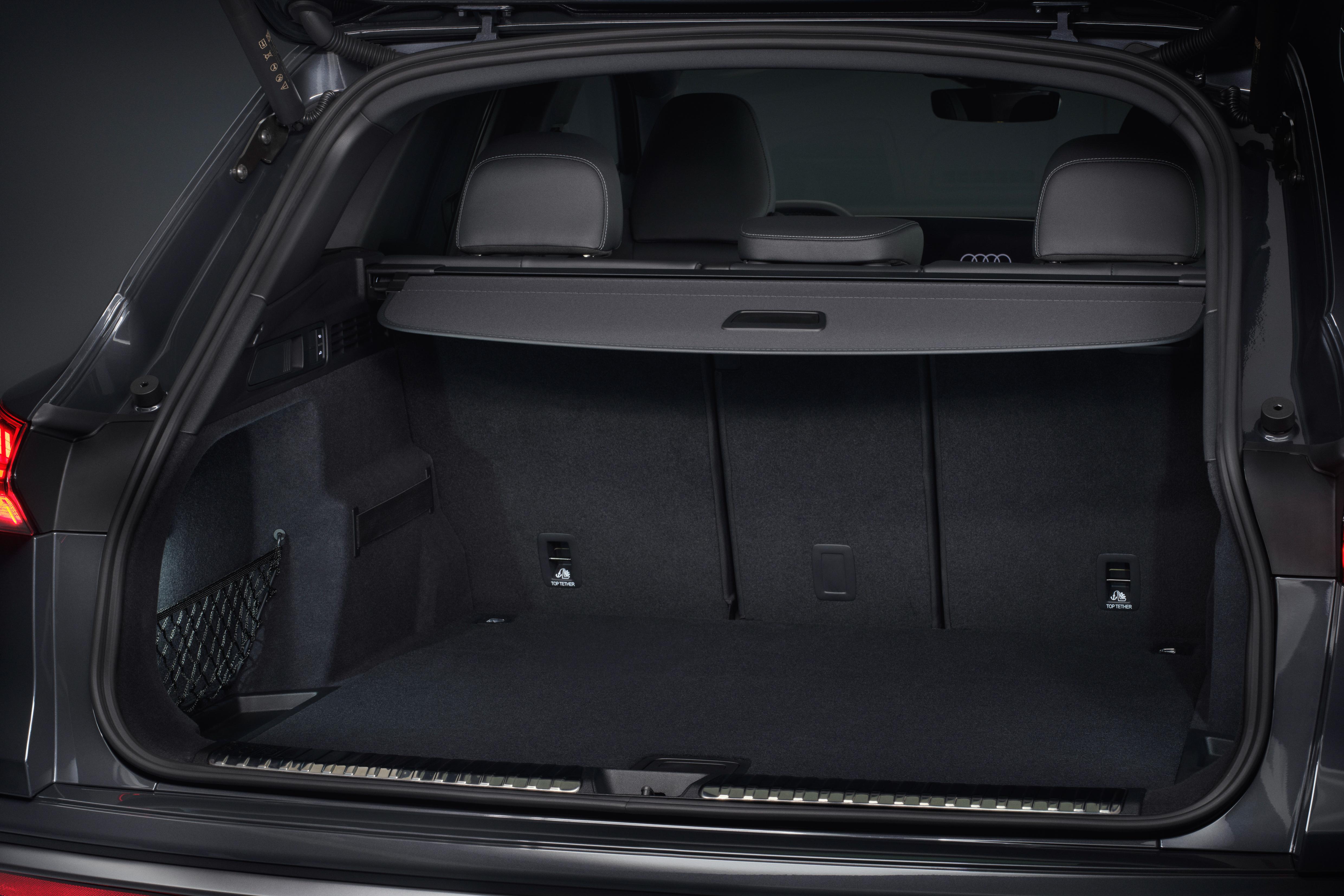
Audi quotes 520 litres of cargo capacity with the rear seats in use, expanding to 1473L with them folded. It appears to have retained its five-seat capacity, but lost some two-seat volume according to official dimensions (1473L v 1520L).

Australian vehicles get the ‘Storage and compartment package’, which brings things like netting and straps to hold loose items in. The Q5 also lacks any form of spare wheel under the boot floor, instead featuring only a tyre repair kit.

DimensionsAudi Q5
Length4717mm
Width1900mm
Height1647mm
Wheelbase2820mm
Cargo capacity520-1473L

To see how the Audi Q5 lines up against the competition, check out our comparison tool

What’s under the bonnet?

A pair of four-cylinder engines with 48V mild-hybrid assistance form the core Q5 range in Australia – one petrol, one diesel. The former is front-wheel drive only, while the diesel is exclusively offered with quattro all-wheel drive.

SpecificationsQ5 TFSIQ5 TDI quattro
Engine2.0L 4cyl turbo-petrol 48V MHEV2.0L 4cyl turbo-diesel 48V MHEV
Engine outputs150kW + 340Nm150kW + 400Nm
Electric motor outputsUp to 18kW + 230NmUp to 18kW + 230Nm
Battery1.7kWh LFP1.7kWh LFP
Transmission7-speed dual-clutch7-speed dual-clutch
Drive typeFront-wheel driveAll-wheel drive
Weight1910kg2030kg
0-100km/h (claimed)8.6s7.4s
Fuel economy (claimed)5.7L/100km5.4L/100km
Fuel tank capacity65L65L
Fuel requirement95 RONDiesel
CO2 emissions129g/km141g/km
Emissions standardEuro 6Euro 6
Braked tow capacity2000kg2000kg

Audi Australia has confirmed a plug-in e-hybrid version of the Q5 will join the ranks at some point, likely in 2026. Two versions are offered globally, one outputting 220kW and the other 270kW – both incorporating a 2.0L turbo-petrol engine.

Paired with a 105kW electric motor and 25.9kWh (gross) battery, the new Q5 e-hybrid range offers up to 100km of EV range according to WLTP testing. The more powerful version can dash from 0-100km/h in a claimed 5.1 seconds and hit a top speed of 250km/h.

The only other available powertrain in Europe is the quattro version of the TFSI 150kW engine, though it’s unclear if that’s on the cards for Australia. Time will tell if a V6 TDI will be added to the mix, and Audi Australia says it will put its hand up for a six-cylinder diesel-powered Q5 if it comes to fruition.

To see how the Audi Q5 lines up against the competition, check out our comparison tool

How does the Audi Q5 drive?

We had brief stints behind the wheel of both the TFSI and the TDI quattro versions of the new Q5, on a mix of highways and B-roads in and around the Gold Coast.

First up was the TDI quattro, which was finished in the very eye-catching Sakhir gold paint and fitted with larger 20-inch alloy wheels as part of the optional $4900 Style package.

The standard passive suspension setup features frequency-selective damping, with adaptive air suspension reserved for the flagship SQ5 as an option – but I’m sure if you asked, Audi would look into offering you an air-suspended Q5.

As with many European – especially premium-branded – vehicles on steel springs, the Q5 errs on the firmer side in an effort to dial in some ‘sporty’ vibes by keeping body movement tight over bumps and in the bends.

Our initial stint on the freeway encapsulated why diesel is still so great in cars like this. The TDI quattro settles into a relaxed hum, there’s heaps of torque at your disposal, and it is a beautifully refined unit.

The 48V MHEV plus technology irons out the typical low-speed dual-clutch quibbles, thanks to its ability to drive in EV mode at low speeds as well as how quickly it fires the engine back up when you need it.

Once rolling, the seven-speed S tronic transmissions offers snappy and crisp upshifts that are nearly imperceptible given how well insulated the cabin is from powertrain noise.

By comparison, the front-driven TFSI is even more refined in terms of sound and is also happier to rev out, though the lack of four-wheel traction means it can easily chirp the front tyres if you’re looking to make a quick getaway.

It also lacks the effortless low-down shove of the diesel, as it’s down 60Nm and peak torque comes in slightly higher (2000rpm v 1750rpm).

While we didn’t get enough time with either powertrain to record realistic fuel consumption figures, the diesel hovered around the 5.0L/100km mark after mostly freeway driving, while the petrol was in the sevens on twistier, undulating B-roads.

As for assistance tech, the Q5 has just about everything bar a semi-autonomous highway mode like the model it replaces, and countless other vehicles both in this segment and others.

Apparently, Audi is working on a software package for both PPC and PPE models to roll out this feature and others that are available overseas, and will likely come with a model year upgrade. It will potentially be retrofittable to some existing cars pending the fitment of requisite hardware, but the brand’s local team couldn’t confirm further details.

It’s a shame that Audi has been forced to leave features off the roster for the Australian market in its effort o ensure a timely launch, especially because the brand’s adaptive cruise assist function is generally very good.

The same issue plagues the related A5 as well as the Q6 e-tron, and it appears the related Porsche Macan Electric is similarly unavailable with a lane centring function locally for the time being. Hopefully this is addressed sooner rather than later.

The Q5 otherwise has a well-sorted set of assistance technologies, including adaptive cruise control with stop and go, lane departure warning and lane-keep assist, and blind-spot monitoring with rear cross-traffic assist.

Standard surround cameras with front and rear parking sensors are a meaningful upgrade to the base spec, making it much easier to place this 4.7m-long and 1.9m-wide family SUV in tight suburban carparks or school carpool lanes.

To see how the Audi Q5 lines up against the competition, check out our comparison tool

What do you get?

The standard Q5 and Q5 ‘sport’ trim levels sit below the SQ5 ‘edition one’ and the SQ5 in the local hierarchy.

2025 Audi Q5 equipment highlights:

  • 19-inch alloy wheels
  • Matrix LED headlights
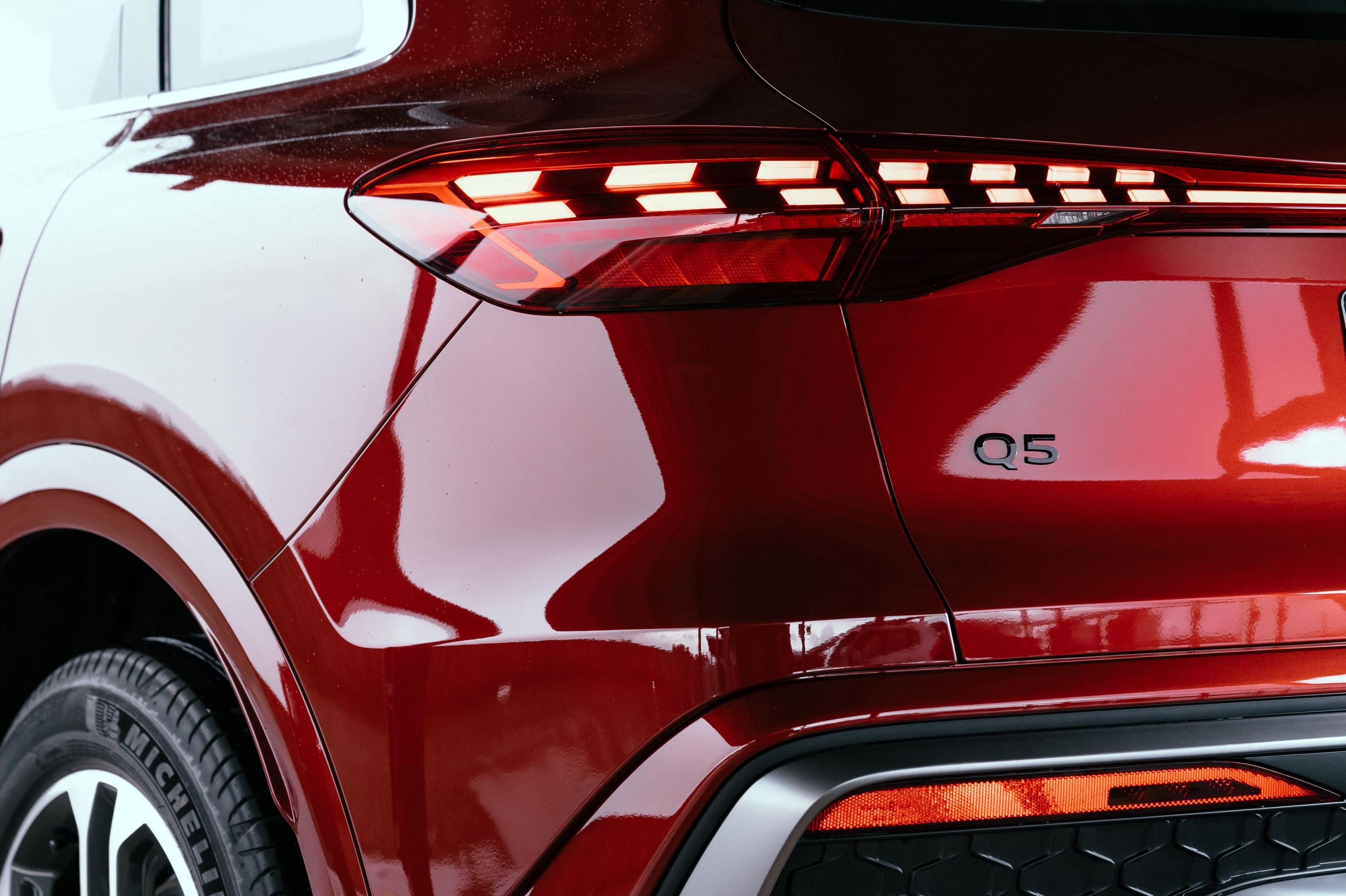
  • LED tail-lights incl. dynamic indicators
  • S line exterior styling
  • High-gloss aluminium exterior trim
  • Keyless entry, start
  • Power tailgate
  • 11.9-inch Audi virtual cockpit
  • 14.5-inch MMI touch display
    • 3D navigation
    • Voice control incl. natural speech recognition
    • MMI search
    • Apple CarPlay – wireless
    • Android Auto – wireless
  • Leather-appointed upholstery
  • 3-zone climate control
  • Heated front seats
  • Power front seat adjustment
  • 4-spoke multifunction steering wheel
  • Colour ambient lighting
  • Illuminated front door sill trims
  • Matte brushed aluminium inlays
  • Digital key
  • Audi phone box light – wireless charging
  • Audi connect plus services
    • Online traffic info incl. hazard alert
    • Destination entry via myAudi app
    • Parking information
    • Car finder
    • Remote lock & unlock
    • Emergency call
    • Online roadside assistance

Q5 TDI quattro sport adds:

  • 20-inch alloy wheels
  • Panoramic sunroof
  • Sport front seats
    • incl. integrated headrests
    • incl. S embossing
  • S line interior package
  • Contrast stitching
  • Steering wheel with flat top, bottom
  • Black headliner
  • Matte brushed aluminium inlays with linear embossing

To see how the Audi Q5 lines up against the competition, check out our comparison tool

Options

Premium package: $5400 – Q5 + Q5 sport

  • Head-up display
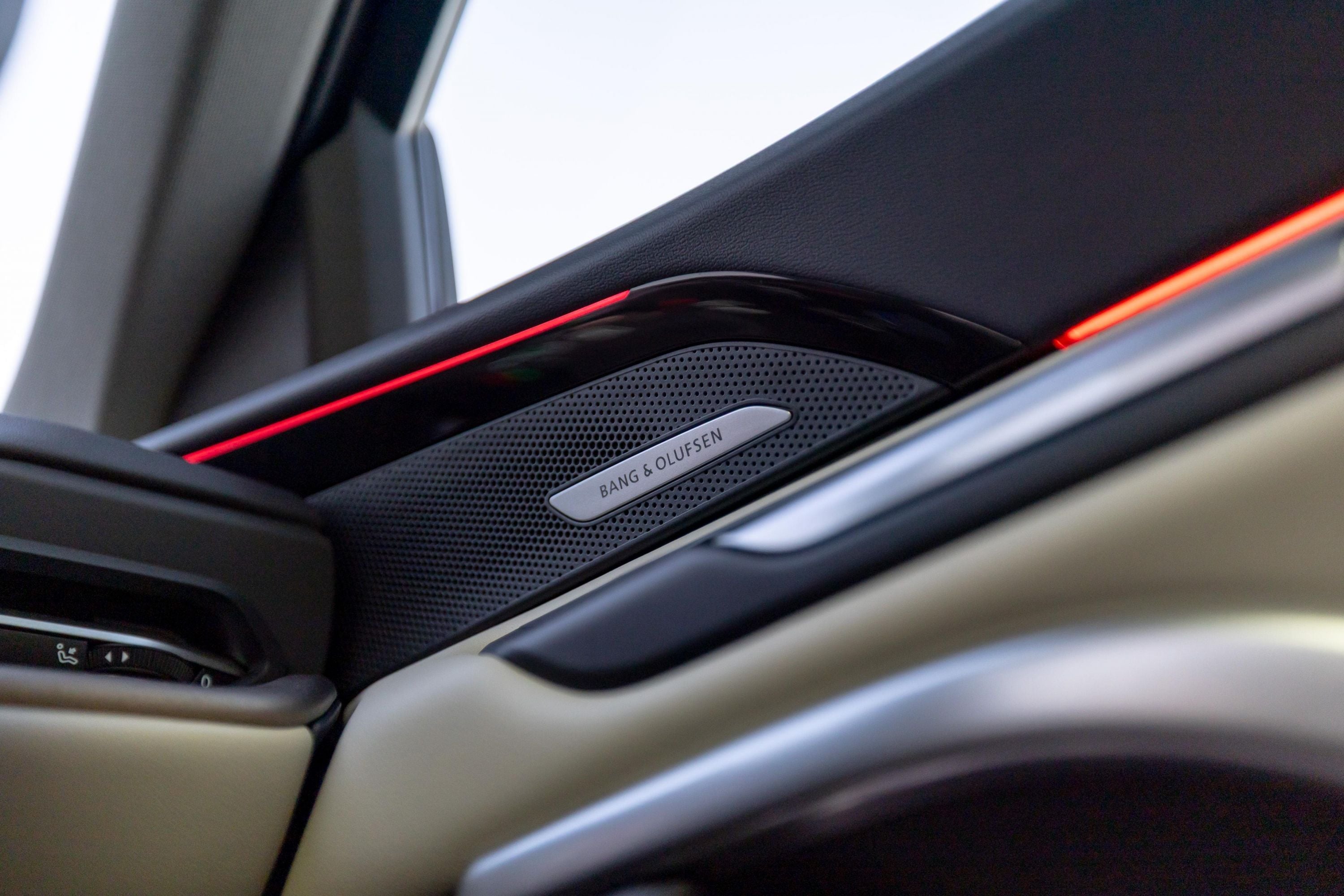
  • Bang & Olufsen 3D premium sound system
  • Colour interior ambient lighting
    • incl. dynamic intersection light
  • USB interfaces with higher charging capacity
  • Acoustic glazing for front door windows

Style package: $3400 (Q5 sport) $4900 (Q5)

  • 20-inch Audi Sport alloy wheels
  • Black exterior package
  • Privacy glass

Tech pro package: $5700 – Q5 sport

  • Heated steering wheel
  • MMI front passenger display
  • Electric steering column
  • Heated outer rear seats
  • Digital OLED tail lights

To see how the Audi Q5 lines up against the competition, check out our comparison tool

Is the Audi Q5 safe?

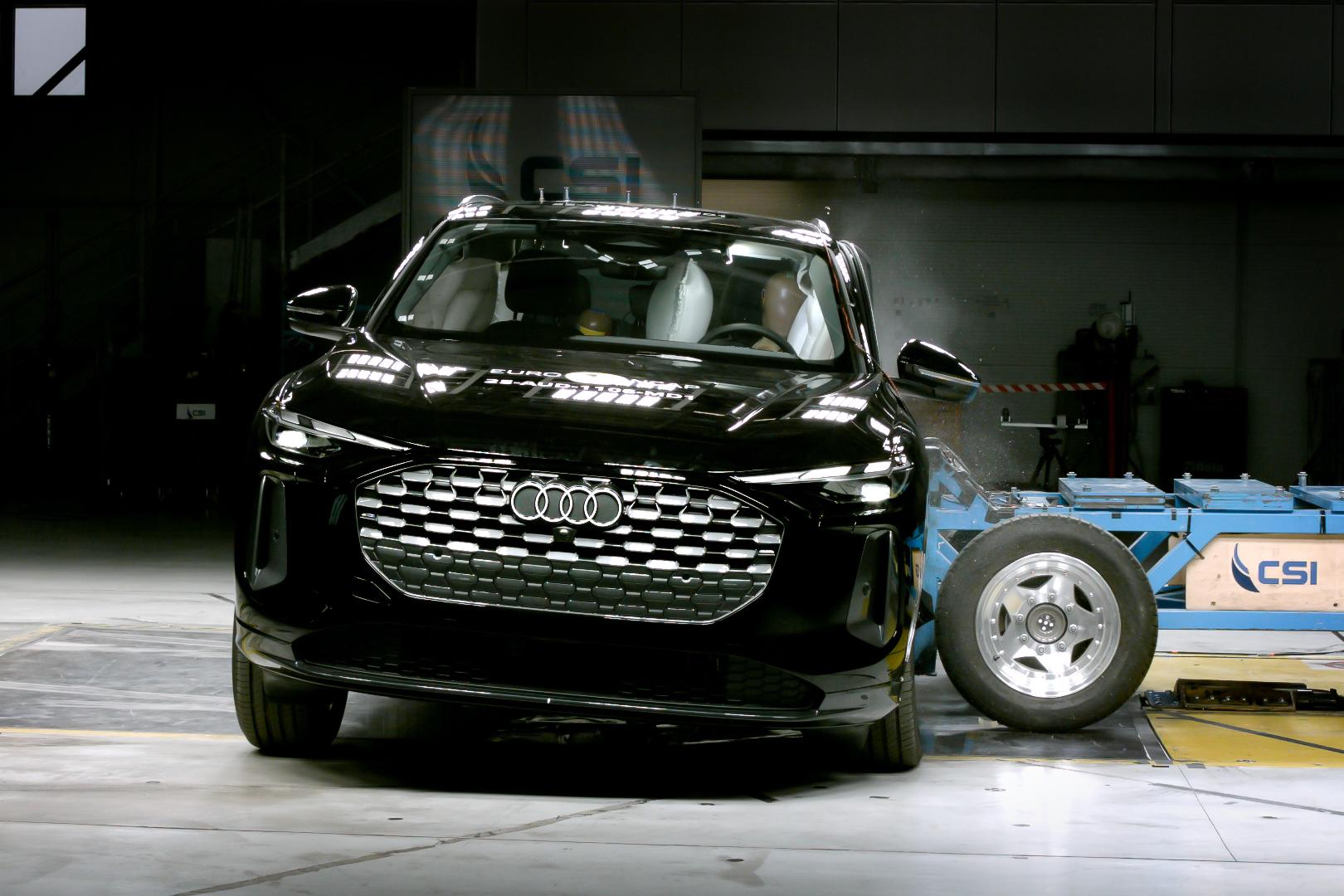
The new-gen Audi Q5 is yet to receive an ANCAP safety rating, though it already has a five-star rating from sister organisation Euro NCAP.

CategoryAudi Q5*
Adult occupant protection85 per cent
Child occupant protection86 per cent
Vulnerable road user protection79 per cent
Safety assist77 per cent

*Euro NCAP scores

Standard safety features include:

  • 9 airbags incl. front-centre
  • Active front assist – AEB
    • Autonomous emergency braking – forward
    • Front cross-traffic assist
    • Front turn assist
    • Swerve assist
  • Adaptive cruise control with stop and go
  • Driver attention and fatigue monitor
  • Emergency assist – lane keep
  • Lane departure warning
  • Side assist
    • Blind-spot monitor
    • Exit warning
    • Rear cross -traffic assist
    • Rear turn assist
  • 360-degree cameras incl. kerb view
  • Park assist plus
    • Parking sensors – front, rear
    • Semi-autonomous parking
  • Tyre pressure loss indicator

Audi has also allowed for quick access to certain assistance feature settings by way of a favourites menu, allowing you to select up to five features that you might want to quickly switch on or off.

Further, the German marque says it spent time calibrating the Q5’s driver assistance systems locally, as it does for most of its new models.

To see how the Audi Q5 lines up against the competition, check out our comparison tool

How much does the Audi Q5 cost to run?

As with the wider Audi lineup, the new Q5 is covered by a five year, unlimited-kilometre new vehicle warranty with five years of roadside assistance.

Servicing and WarrantyAudi Q5
Warranty5 years, unlimited kilometres
Roadside assistance5 years
Service intervals12 months or 15,000 kilometres
Capped-price servicing5 year Service Plan
Total capped-price service cost$3520

To see how the Audi Q5 lines up against the competition, check out our comparison tool

CarExpert’s Take on the Audi Q5

We need more time behind the wheel to make a more definitive verdict, but the new Q5 is a solid contender in the premium mid-size SUV segment, even if it doesn’t really break any new ground.

Our first impressions of the new engine range are positive, although there’s nothing exemplary here either. I’m quite a fan of the TDI quattro, which is refined and relaxed while also offering excellent fuel economy.

The lack of the full driver assistance suite from launch and the not-insignificant increase in pricing stings a little, though at least the former should be addressed in due course.

I’d also like to see adaptive damping and air suspension offered more widely across the core range, as the standard suspension is a touch on the firm side for the kind of everyday duties the Q5 will be subjected to by Australian buyers.

Further, while Audi’s touch-heavy interior isn’t as fiddly or gimmicky as the interfaces in models from other Volkswagen Group brands, it still feels like a step backwards from the brand’s beautifully built and highly ergonomic interiors of old – but hey, it’s shiny!

Based on my short-ish drive of the base models, I think the standard TDI quattro might be the pick when bundled with the $5400 Premium package, which adds niceties like the Bang & Olufsen premium sound system and a head-up display.

The base car may lack the option of a sunroof, but you do get the choice of three interior colours and two different wood inlays instead of the standard brushed aluminium, which is much more old-school luxury than the single black-on-metal interior of the more expensive TDI quattro sport.

While many are of the belief that ‘diesel is dead’, the oiler offers torquey and relaxed performance despite fuel efficiency that could make some full hybrids sweat a little. If you’re spending lots of time on the open road, or drive on the odd dirt trail, it’s the obvious pick of the core engines.

Stay tuned for a more definitive verdict on the new Q5 after we get a more extensive week-long stint behind the wheel in the coming months.

CarExpert can save you thousands on a new Audi Q5. Click here to get a great deal.

Click the images for the full gallery

MORE: Explore the Audi Q5 showroom